EPISODE 7-Cultural Authenticity in Illustration 2027: How Regional Craft and Lived Experience Create Meaningful Visual Language
Discover how culturally grounded illustration creates deeper audience connections in 2027. Learn ethical approaches to regional craft and visual storytelling.
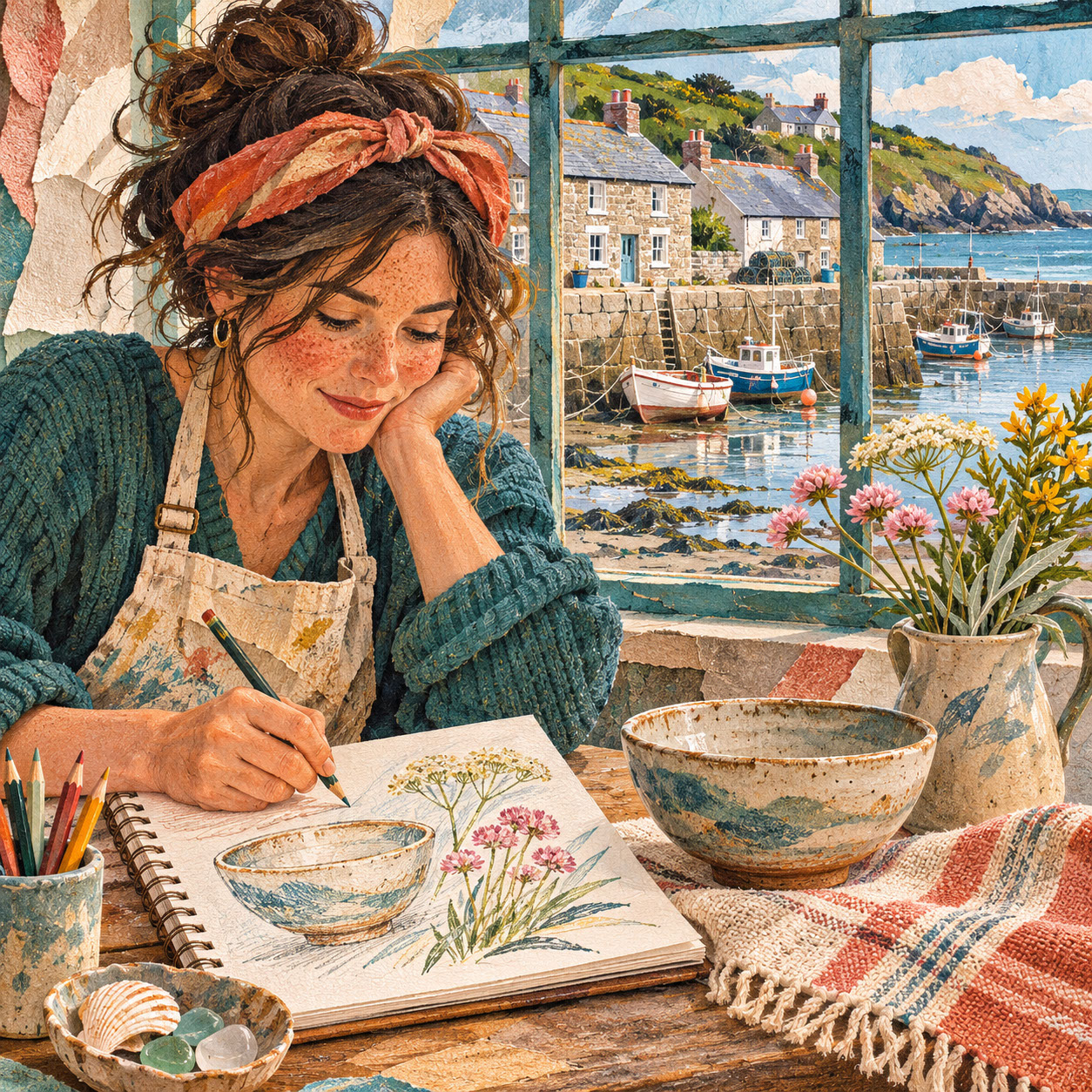 🔍 COVER PLATE — CLICK TO EXPAND
Square hero cover for Episode 7 ('Cultural Authenticity in Illustration 2027: How Regional Craft and Lived Experience Create Meaningful Visual Language'): an illustrator sketches a handmade pottery bowl and coastal flora beside a studio window overlooking a Cornish tidal harbour with granite cottages and slate roofs.
Have you ever noticed how illustration from Tokyo can sometimes look remarkably similar to work from Toronto, Cape Town, or São Paulo? There's a growing sense that globalised visual culture has created a certain sameness—a polished, interchangeable aesthetic that could belong anywhere and therefore belongs nowhere. In 2027, audiences are increasingly hungry for something different: illustration that feels rooted, specific, and genuinely connected to place and community.
This shift towards cultural authenticity isn't about rejecting global influences or retreating into insularity. Rather, it's about recognising that the most powerful visual work often emerges from deep understanding of specific places, traditions, and lived experiences. When illustration draws on genuine cultural knowledge, it creates connections that generic imagery simply cannot replicate.
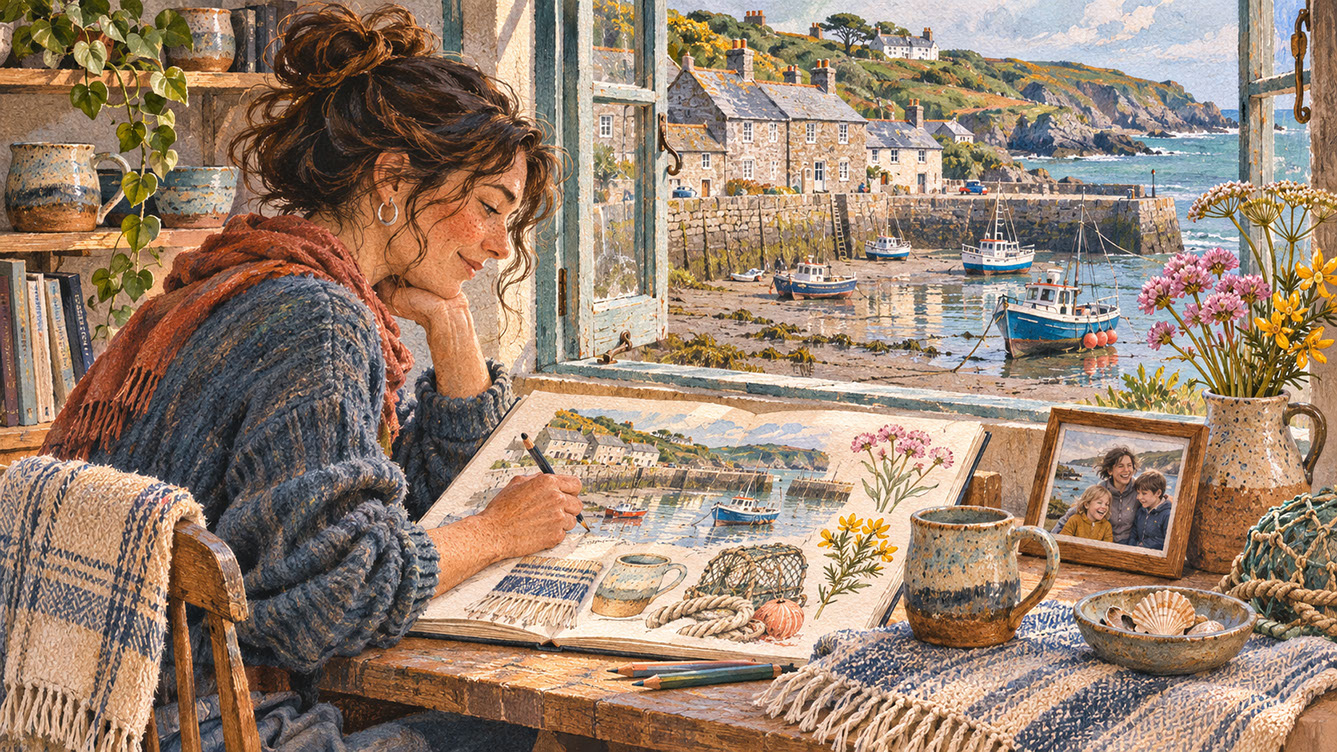 🔍 PLATE 01 — CLICK TO EXPAND
Regional Craft & Lived Experience — Lead narrative plate for Episode 7: an illustrator sketches at an open studio window overlooking a Cornish tidal harbour with granite cottages and slate roofs, surrounded by locally made pottery, woven cloth, and observed coastal flora. Colour Palette: Harbour Teal (#165B5C), Cornish Slate (#475569), Clay Ochre (#D48C32), Coastal Coral (#E86348)
Moving Beyond Surface-Level Motif Borrowing
Let's be honest about a problem that's plagued illustration for decades: superficial cultural borrowing. You know the type—exotic patterns used purely for decorative effect, stereotypical imagery divorced from its original meaning, or cultural symbols reduced to trendy aesthetic choices. This approach might have passed without comment in previous decades, but audiences in 2027 are far more visually literate and culturally aware.
Digital connectivity has created a fascinating paradox. On one hand, we have unprecedented access to visual traditions from around the world. On the other, this same connectivity means communities can quickly identify when their cultural imagery is being misused or misrepresented. What was once invisible appropriation is now visible and increasingly called out.
The distinction between borrowing and genuine engagement comes down to understanding. Taking visual elements without comprehending their context, history, or significance is fundamentally different from deeply engaging with cultural material. Think of it as the difference between being a visual tourist—snapping quick pictures and moving on—versus becoming a visual citizen who takes time to understand, contribute, and build relationships.
Meaningful cultural engagement in illustration shows itself through nuanced details that only emerge from genuine knowledge. It's the difference between adding a generic 'traditional pattern' to a background and understanding why certain motifs appear in specific contexts, what they signify, and how they've evolved over time.
 🔍 PLATE 02 — CLICK TO EXPAND
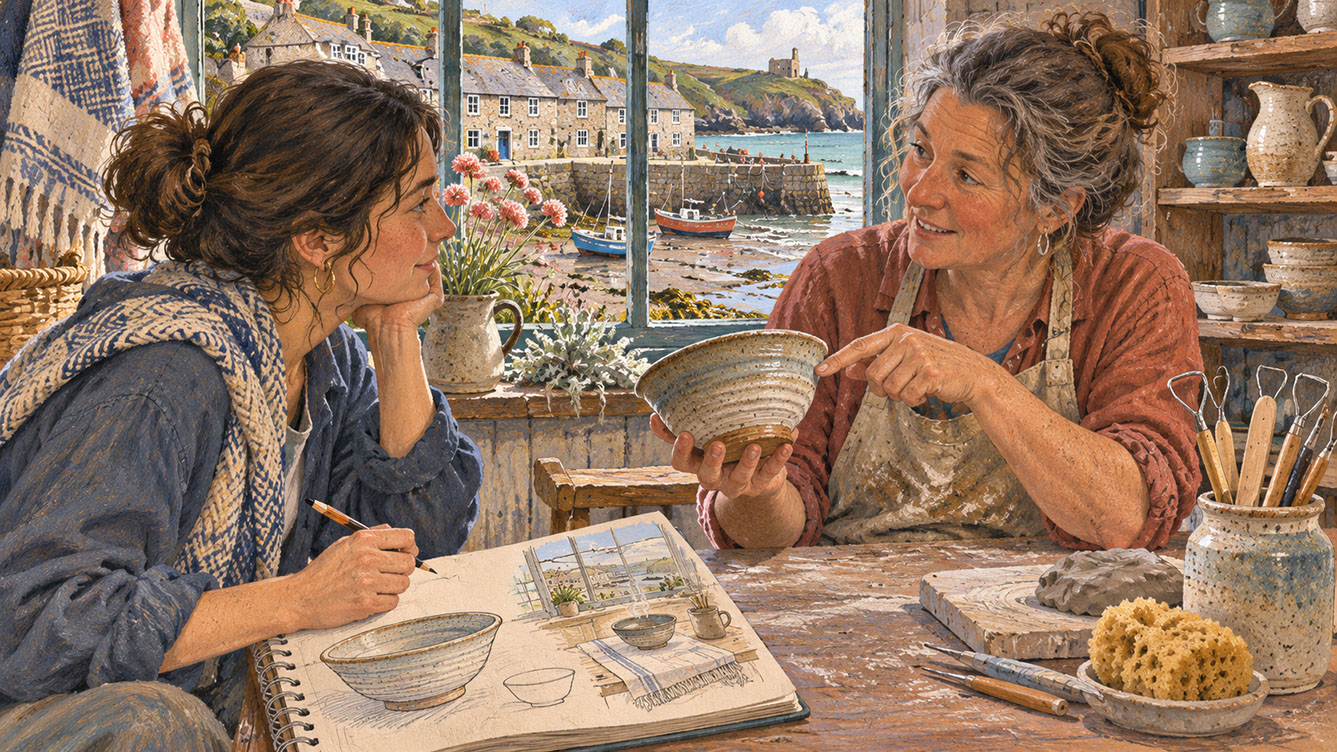
Moving Beyond Surface-Level Motif Borrowing — Direct Dialogue with Local Makers — Respectful inquiry plate for 'Moving Beyond Surface-Level Motif Borrowing': an illustrator listens attentively in a coastal pottery studio as a local ceramicist explains the form, function, and clay texture of a handmade vessel before drawing begins. Colour Palette: Terracotta Clay (#C86446), Slate Blue (#4A5D73), Ochre Glaze (#D9942E), Studio Cream (#F5EFE2)
The Value of Lived Experience and Regional Craft
There's simply no substitute for lived experience when it comes to cultural authenticity. Growing up within a culture, or engaging deeply with it over extended periods, provides understanding that surface research cannot replicate. It's in the small details: knowing how afternoon light falls through particular types of windows, understanding the specific colours of local market produce, recognising the rhythm and energy of community gatherings.
This doesn't mean outsiders can never engage with cultural material—we'll address that shortly—but it does mean acknowledging that lived experience creates a foundation of knowledge that informs illustration in profound ways. The illustrator who grew up watching their grandmother weave textiles understands the rhythm, patience, and meaning embedded in those patterns differently than someone who discovered them through Pinterest.
Regional craft traditions offer particularly rich foundations for illustration. Local making traditions—whether textile techniques, pottery methods, woodworking approaches, or metalwork—carry centuries of accumulated visual knowledge. These crafts developed in response to available materials, climate conditions, cultural values, and practical needs, creating distinctive visual languages that feel inherently authentic.
Consider how material constraints historically shaped regional colour palettes. Before global trade made pigments universally available, illustrators and craftspeople worked with locally sourced materials. This created visual traditions intrinsically connected to specific landscapes—the earth tones of certain regions, the vibrant plant-derived dyes of others. Modern illustrators can draw on these historical palettes to create work that feels genuinely rooted in place.
 🔍 PLATE 03 — CLICK TO EXPAND
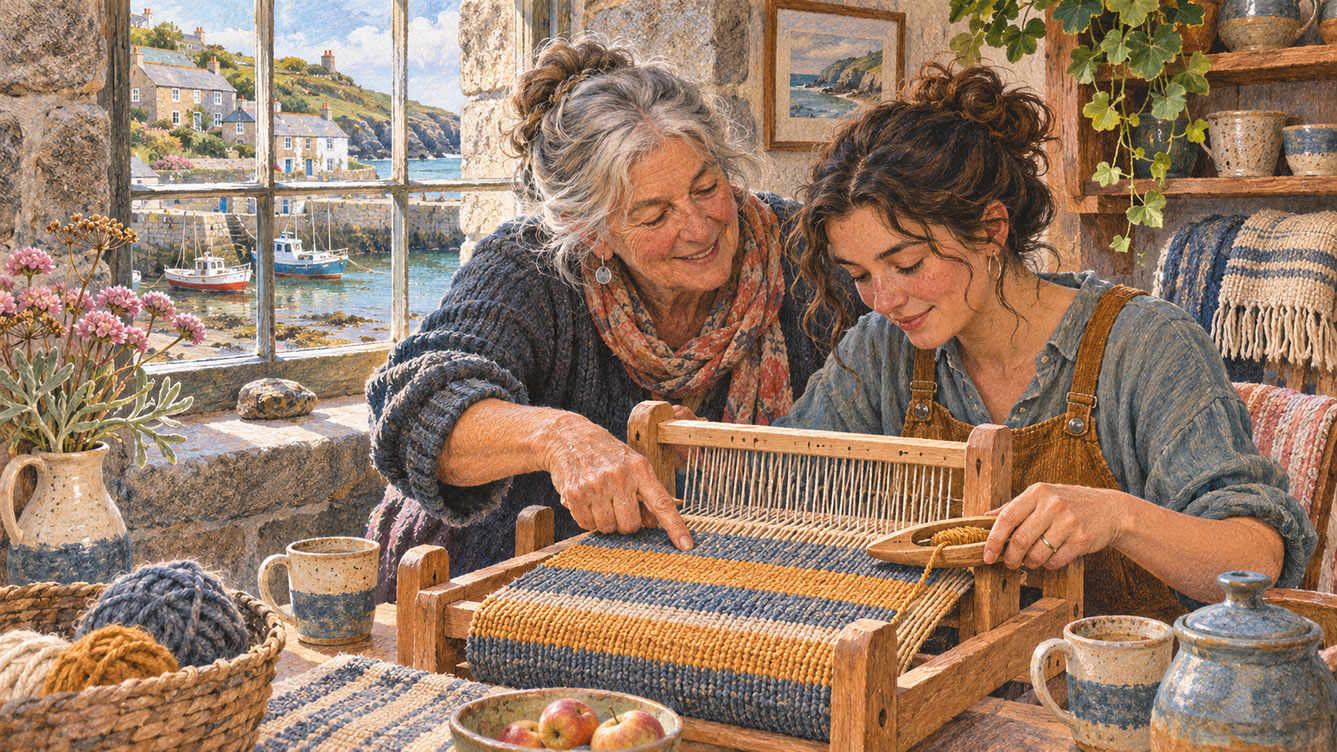
The Value of Lived Experience and Regional Craft — Intergenerational Knowledge — Lived heritage study for 'The Value of Lived Experience and Regional Craft': an older craftsperson guides a younger family member weaving ochre and slate-blue stripes on a small wooden loom beside a deep granite window. Colour Palette: Woven Ochre (#D89228), Slate Blue Yarn (#3E566E), Warm Coral (#E66048), Linen Cream (#F4EDE0)
Sources of Meaningful Visual Language
When we talk about cultural visual language, we're referring to the visual vocabulary that emerges from specific places and communities. Let's explore some of the richest sources.
Architecture and Built Environment
Local building styles provide extraordinary visual material. The shapes of doorways, the patterns of windows, the colours of exterior walls, the materials used for roofing—all of these elements carry cultural information. Interior spaces and domestic environments offer equally rich territory: the arrangement of objects, the textiles used in homes, the way different cultures organise living spaces.
Food and Culinary Traditions
Regional cuisine offers remarkable visual richness. The colours and textures of local ingredients, traditional preparation methods, serving traditions, and the social customs surrounding food all provide authentic illustration material. Market scenes, in particular, concentrate cultural visual information in wonderfully dense ways.
Landscapes and Natural Environment
Regional geography shapes visual understanding in fundamental ways. The quality of light in different latitudes, the colours of local flora and fauna, the textures of regional landscapes—these elements inform illustration that feels genuinely connected to place. An illustrator depicting coastal Cornwall will naturally work with different visual references than one depicting the Scottish Highlands or the Norfolk Broads.
Lettering and Typography
Regional lettering traditions offer fascinating illustration inspiration. Hand-painted shop signage, vernacular typography, the visual characteristics of local languages and scripts—all of these elements contribute to culturally specific visual vocabulary.
Textiles and Pattern Traditions
Textile techniques carry deep cultural meaning. Traditional patterns often encode stories, status, regional identity, or spiritual significance. Understanding these meanings—rather than simply reproducing patterns decoratively—allows illustrators to work with cultural material respectfully and knowledgeably.
Oral Storytelling and Community History
Visual narrative traditions within cultures provide both content and context for illustration. The stories communities tell about themselves, their histories, their values, and their relationships to place all offer material for culturally grounded visual work.
 🔍 PLATE 04 — CLICK TO EXPAND
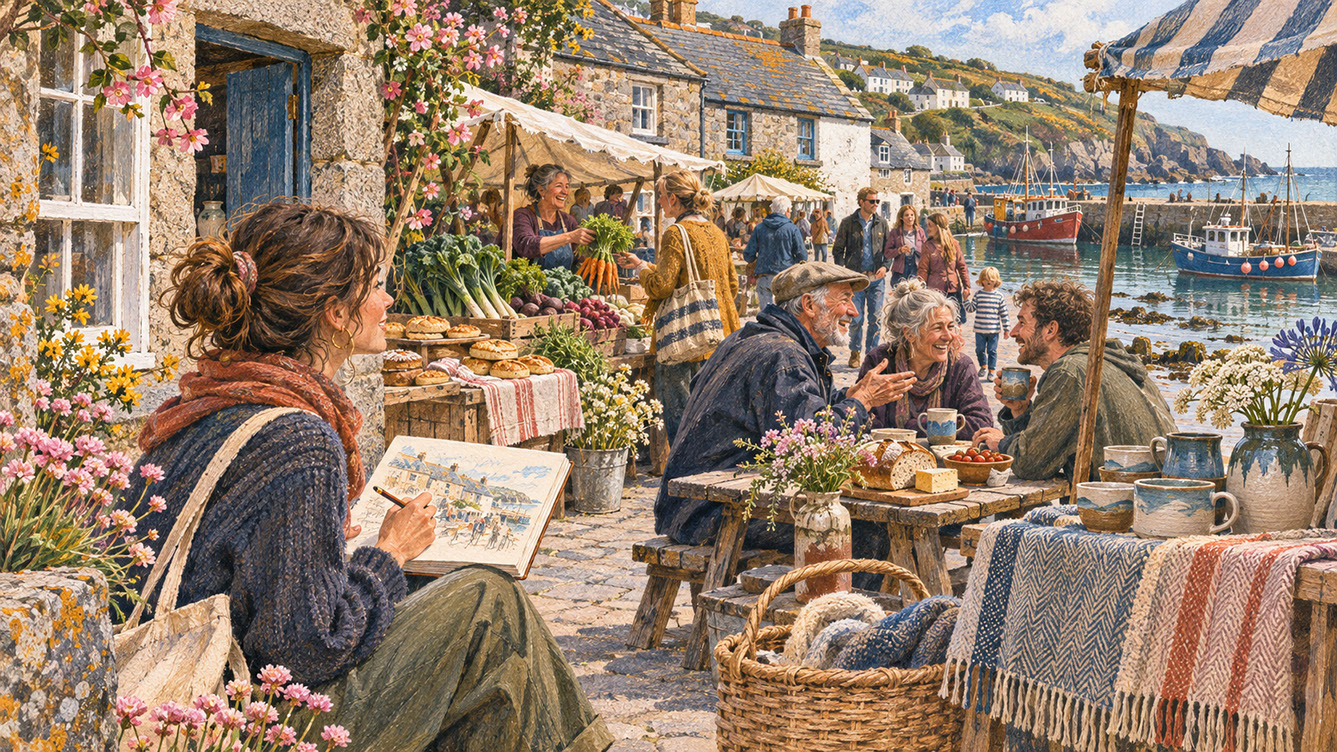
Sources of Meaningful Visual Language — Architecture, Food, Textiles & Community Life — Observational fieldwork plate for 'Sources of Meaningful Visual Language': an illustrator sketches a bustling Cornish harbour market where granite architecture, seasonal vegetables, handmade ceramics, woven textiles, and community life form a coherent local visual vocabulary. Colour Palette: Deep Teal (#134E4A), Warm Coral (#F26A4B), Golden Ochre (#D99B26), Soft Studio Cream (#F6EFE2)
Researching Properly and Crediting Influences
Surface-level internet research simply isn't sufficient for genuine cultural engagement. A quick image search might show you what traditional patterns look like, but it won't tell you what they mean, when they're appropriate to use, or who has authority to share them.
Deeper research methods include reading books by cultural insiders, watching documentaries that explore cultural context, and—where possible—travelling to experience places and traditions firsthand. Primary sources and direct observation provide understanding that secondary sources cannot.
Building relationships matters enormously. Rather than extractive one-off research, consider developing ongoing connections with communities or cultural experts. Ask questions rather than making assumptions. Seek permission when appropriate, particularly for imagery that might have sacred or protected significance.
Crediting influences transparently is essential. When your work draws on specific cultural traditions, acknowledge those influences clearly. There's an important difference between being inspired by a tradition and claiming it as your own invention. Transparency about your relationship to the culture you're referencing—whether insider, outsider, or somewhere in between—builds trust and demonstrates respect.
 🔍 PLATE 05 — CLICK TO EXPAND
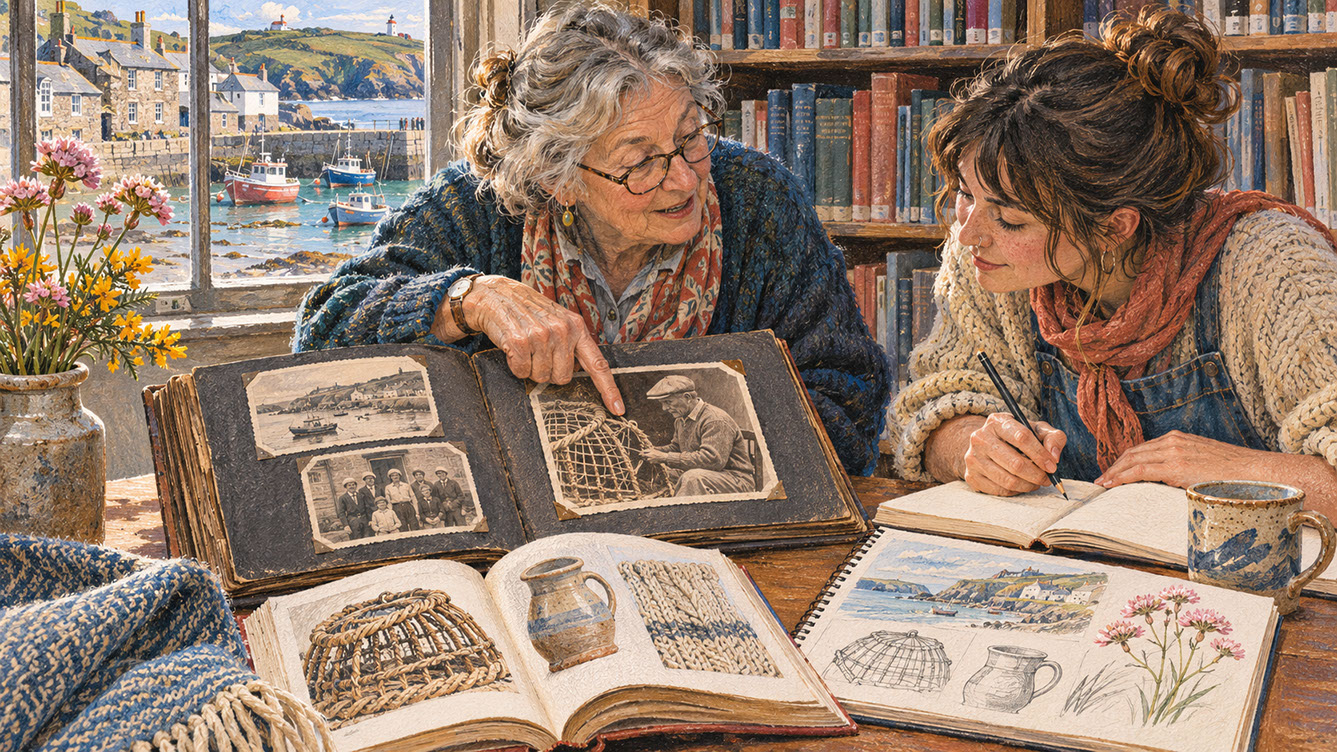
Researching Properly and Crediting Influences — Primary Sources & Community Historians — Ethical research plate for 'Researching Properly and Crediting Influences': an illustrator and a local community historian study archival photographs and regional craft records together at a library table to trace and credit original makers accurately. Colour Palette: Deep Teal (#134E4A), Warm Coral (#F26A4B), Golden Ochre (#D99B26), Soft Studio Cream (#F6EFE2)
Avoiding Decorative Appropriation Whilst Celebrating Cultural Richness
Recognising appropriation requires honest self-reflection. Key indicators include using cultural elements purely for aesthetic effect without understanding their meaning, profiting from cultural imagery whilst the source community does not benefit, and using sacred or protected imagery without permission or authority.
A useful ethical framework involves asking yourself several questions before incorporating cultural elements: Do I understand what this imagery means within its cultural context? Do I have permission or appropriate relationship to use it? Who benefits from this work? Am I amplifying cultural expression or exploiting it?
Celebrating cultural richness respectfully means creating work that honours traditions rather than diminishing them. It often means supporting and platforming illustrators from within cultures, rather than always speaking for communities yourself.
Sometimes the most respectful choice is stepping back. If you're not the right person to tell a particular story or use specific cultural imagery, recommending or commissioning an illustrator with relevant lived experience isn't disengagement—it's respect.
 🔍 PLATE 06 — CLICK TO EXPAND
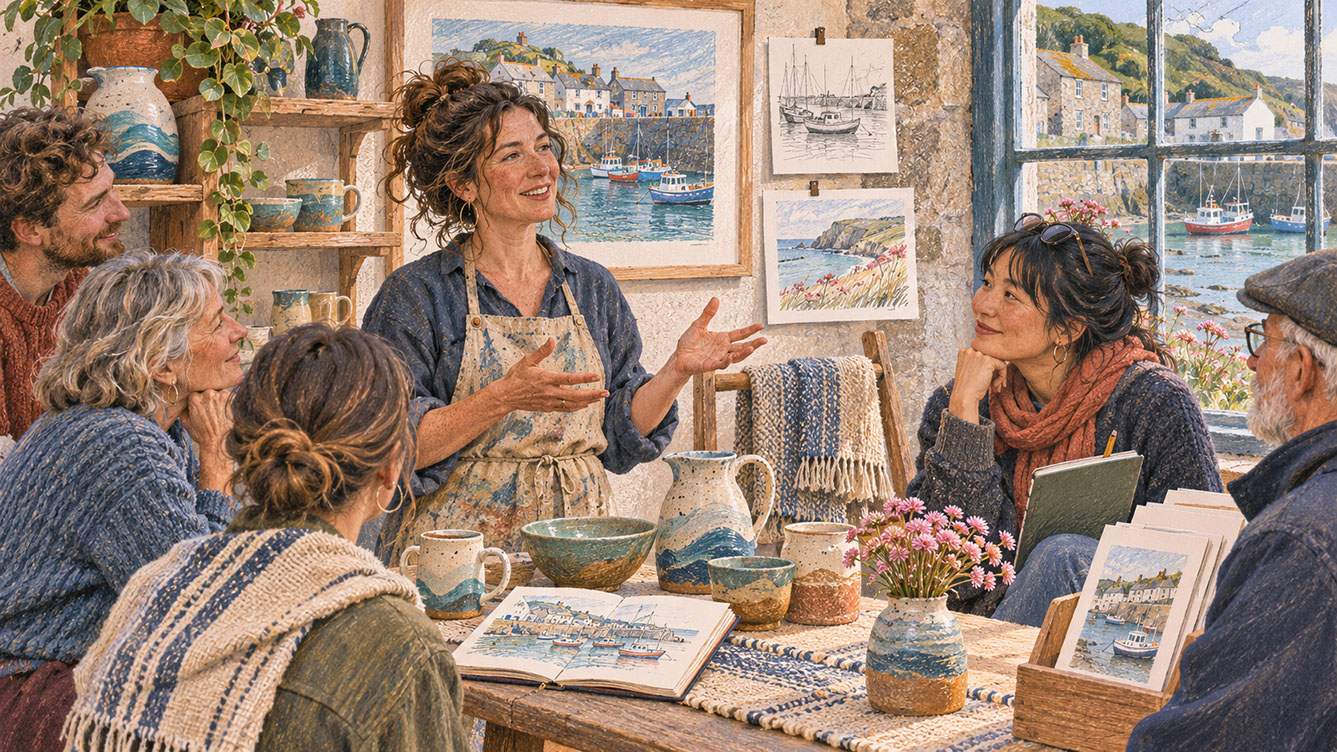
Avoiding Decorative Appropriation Whilst Celebrating Cultural Richness — Reciprocal collaboration plate for 'Avoiding Decorative Appropriation Whilst Celebrating Cultural Richness': a local maker leads a gallery presentation of their ceramics and harbour studies while a visiting illustrator and community members listen attentively. Colour Palette: Deep Teal (#134E4A), Warm Coral (#F26A4B), Golden Ochre (#D99B26), Soft Studio Cream (#F6EFE2)
The Commercial Advantage of Culturally Grounded Illustration
Here's something worth noting: culturally specific illustration often outperforms generic imagery commercially. In a marketplace saturated with interchangeable visuals, work that feels genuinely rooted in place and tradition stands out.
Brands increasingly seek authentic cultural connections rather than surface-level diversity imagery. Culturally grounded illustration builds trust with specific communities who recognise genuine understanding in visual work. When audiences see themselves authentically represented, they respond with loyalty and engagement.
There's a beautiful paradox here: highly specific cultural work often has broader appeal than generic imagery designed to appeal to everyone. Authentic detail creates emotional connections that transcend the specific culture being depicted. Audiences respond to genuine understanding and care, even when the specific cultural context isn't their own.
 🔍 PLATE 07 — CLICK TO EXPAND
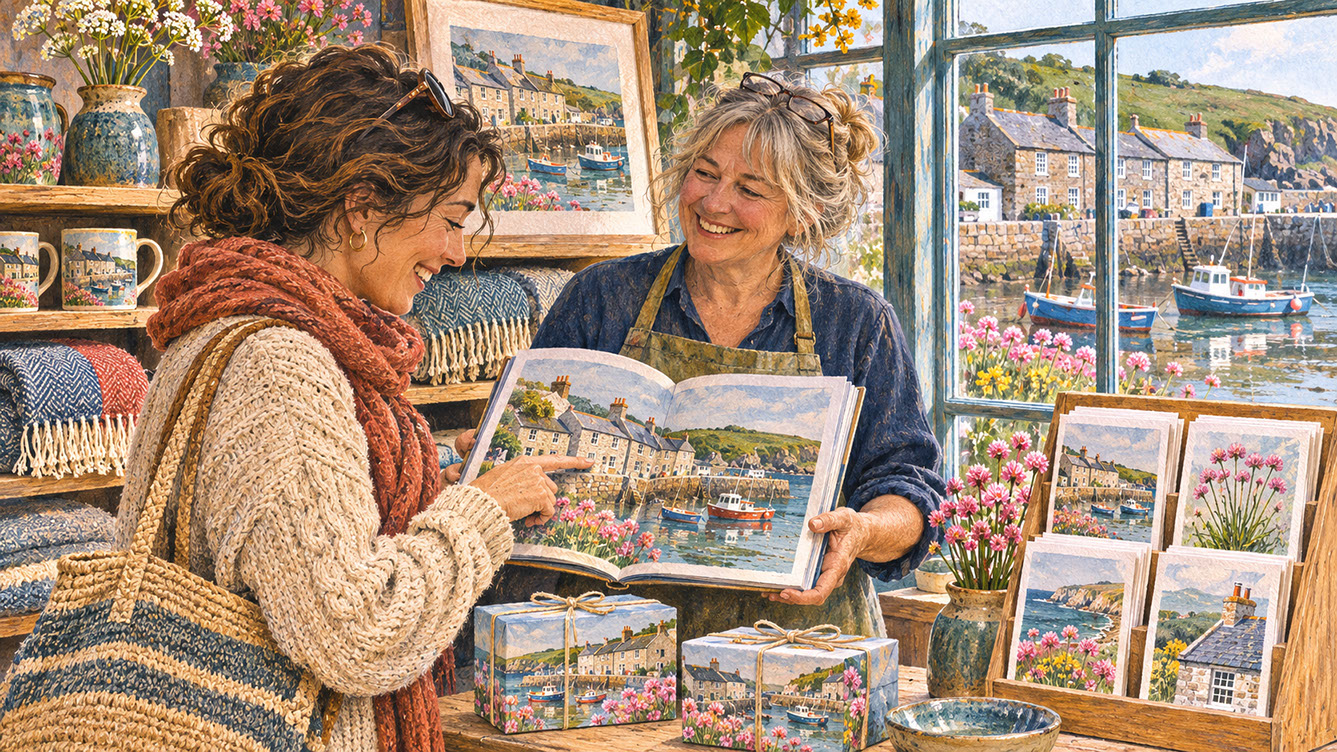
The Commercial Advantage of Culturally Grounded Illustration — Authentic Place Recognition — Commercial resonance plate for 'The Commercial Advantage of Culturally Grounded Illustration': a coastal shop displays packaging, cards, and books illustrated with the very granite cottages, slate roofs, and harbour boats seen through the window as a customer smiles in recognition. Colour Palette: Deep Teal (#134E4A), Warm Coral (#F26A4B), Golden Ochre (#D99B26), Soft Studio Cream (#F6EFE2)
Practical Guidance for Illustrators
For Illustrators Working Within Their Own Culture
Recognise and value your own cultural visual language—it's a genuine asset. Avoid self-exoticisation for external markets; don't reduce your culture to what outsiders find picturesque or unusual. Balance commercial viability with cultural integrity, finding ways to share your visual heritage authentically.
For Illustrators Working Outside Their Culture
Approach commissioned work involving other cultures with humility and thorough research. Collaborate with cultural consultants or community members where possible. Treat cultural engagement as a long-term relationship rather than a one-off project.
Building Culturally Grounded Practice
Develop ongoing relationships with cultural knowledge sources. Create visual libraries based on genuine experience and understanding. Balance respect for tradition with contemporary creative expression, finding ways to honour heritage whilst contributing something new.
 🔍 PLATE 08 — CLICK TO EXPAND
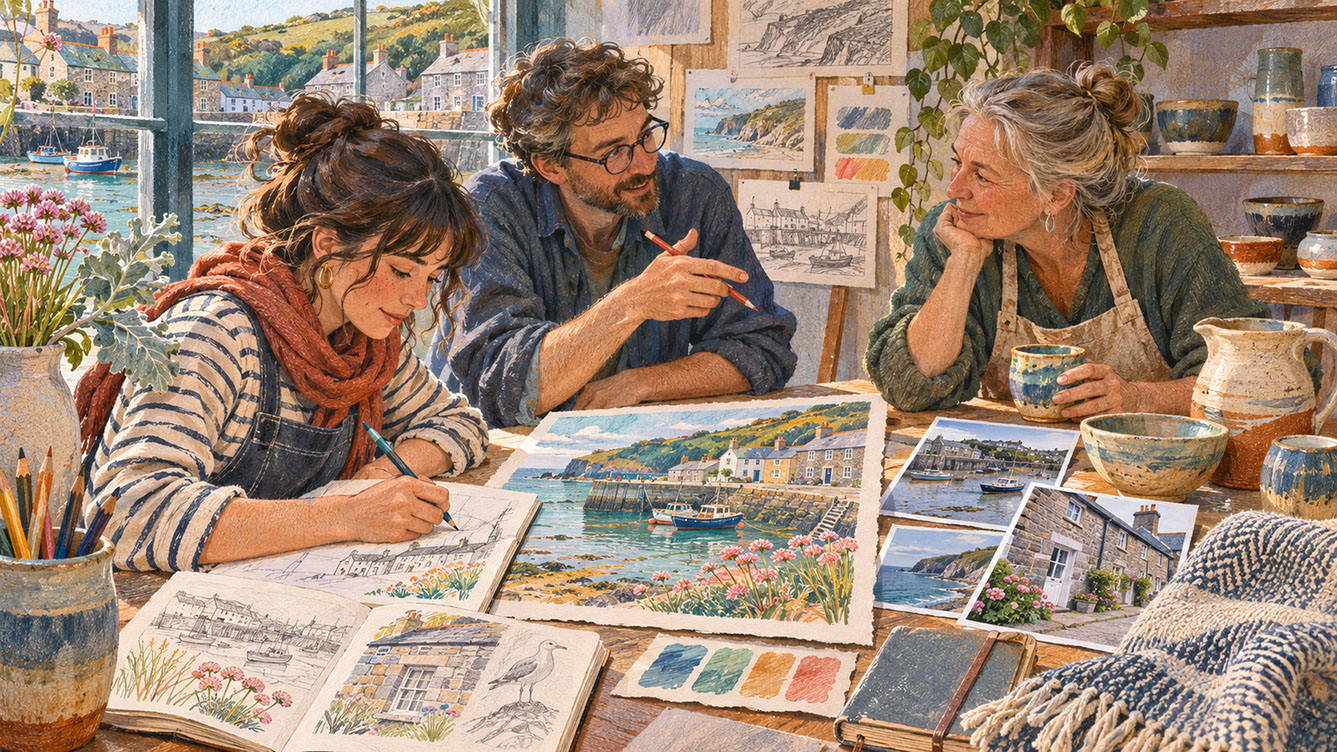
Practical Guidance for Illustrators — Collaborative Review & Field Observation — Studio practice plate for 'Practical Guidance for Illustrators': two illustrators and a local potter jointly review field sketches, architectural reference photographs, pottery vessels, and refined illustrations in an equal creative partnership. Colour Palette: Deep Teal (#134E4A), Warm Coral (#F26A4B), Golden Ochre (#D99B26), Soft Studio Cream (#F6EFE2)
Conclusion
Meaningful cultural engagement in illustration goes far beyond borrowing attractive motifs. It requires understanding context, building relationships, and approaching cultural material with genuine respect and curiosity. Lived experience and regional craft create foundations for authentic visual language that surface research cannot replicate.
The commercial advantages of culturally grounded illustration are real and growing. Audiences increasingly recognise and reward authentic cultural engagement, whilst rejecting superficial borrowing. For illustrators, developing genuine cultural knowledge—whether of your own heritage or through respectful long-term engagement with other traditions—represents a significant creative and professional investment.
The most powerful illustration connects the specific to the universal. By truly seeing and expressing one particular place, community, or experience, you create work that speaks to human experience everywhere. Cultural specificity, rather than limiting your audience, often expands it—because authenticity resonates across boundaries in ways that generic imagery never can.
 🔍 PLATE 09 — CLICK TO EXPAND
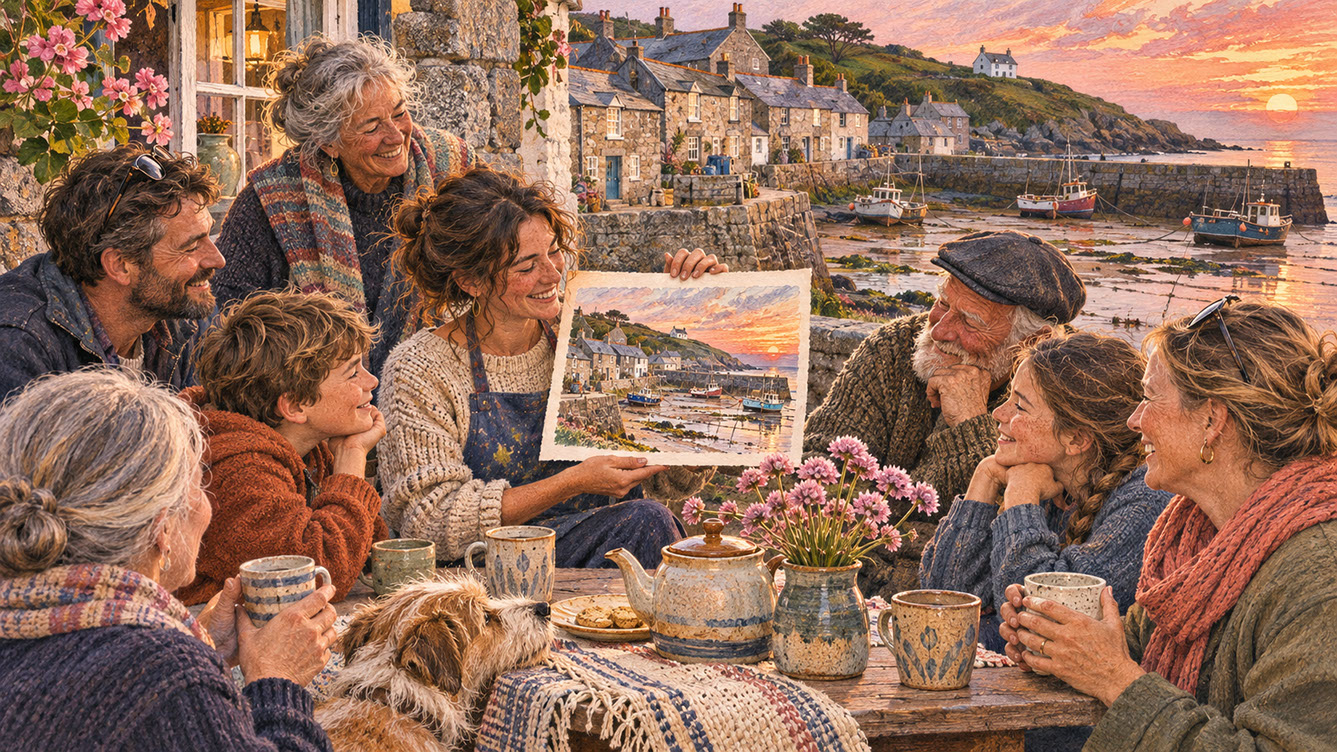
Conclusion — How Specific Place & Lived Experience Create Universal Human Connection — Closing community plate for 'Conclusion': neighbours of different generations gather on a harbour-side terrace at sunset sharing tea from handmade mugs as an illustrator holds up a finished painting of their coastal home. Colour Palette: Deep Teal (#134E4A), Warm Coral (#F26A4B), Golden Ochre (#D99B26), Soft Studio Cream (#F6EFE2)
⚡ 5 Strategies to Consider
STUDIO PLAYBOOK // 5 DIRECTIVES❓ Frequently Asked Questions — 5 Q&As (5 Q&As)
SCHEMA.ORG/FAQPAGE // 5 Q&As (5 Q&As)Q1. How do I know if I'm appropriating or appreciating a culture in my illustration work?
The distinction lies in relationship, understanding, permission, and benefit. Appropriation typically involves using cultural elements without understanding their meaning, taking without permission, and profiting whilst the source community does not benefit. Appreciation involves genuine research, seeking permission when appropriate, crediting influences transparently, and ensuring your work amplifies rather than exploits cultural expression. Ask yourself: Do I understand what this imagery means in context? Do I have appropriate relationship to use it? Who benefits from this work?
Q2. Can I illustrate cultures I haven't personally experienced?
Yes, but with important caveats. Deep research, collaboration with cultural consultants, and appropriate contexts matter greatly. Surface-level internet research is insufficient—seek primary sources, books by cultural insiders, and where possible, direct engagement with communities. Consider whether you're the right person for specific projects, and be willing to recommend illustrators with relevant lived experience when appropriate. Long-term engagement demonstrates more respect than one-off extractive research.
Q3. How do I develop cultural visual language from my own background?
Start by documenting your immediate environment and heritage through photography, sketching, and note-taking. Pay attention to architecture, local landscapes, family traditions, regional food, vernacular lettering, and craft traditions you grew up around. Research the historical context of these elements. Recognise that what feels 'ordinary' to you carries genuine cultural specificity—your normal is someone else's distinctive. Create organised visual libraries of these elements to draw upon in your work.
Q4. What if my culture feels ordinary or like the default?
Every culture has distinctive visual language worth exploring—the perception of being 'default' often comes from dominant cultural positions where your visual traditions are so ubiquitous they become invisible to you. Look more closely at regional architecture, local food traditions, vernacular typography, landscape qualities, and craft traditions specific to your area. What seems ordinary to you will feel specific and meaningful to audiences from other contexts. Your 'normal' carries genuine cultural richness.
Q5. What are the main sources of authentic cultural visual language for illustrators?
Key sources include architecture and built environment (doorways, windows, streetscapes, interior spaces), food and culinary traditions (ingredients, preparation methods, market scenes), landscapes and natural environment (regional geography, local flora and fauna, quality of light), lettering and typography (hand-painted signage, vernacular lettering), textiles and pattern traditions (regional techniques and their meanings), and oral storytelling and community history (visual narrative traditions, shared cultural stories).