The Death of Clip Launching: Why Generative Performance Will Define the Next VJ Era
Discover why VJs are abandoning pre-rendered clips for generative systems that never repeat. Learn the three-layer architecture transforming live visuals.
 🔍 COVER PLATE — CLICK TO EXPAND
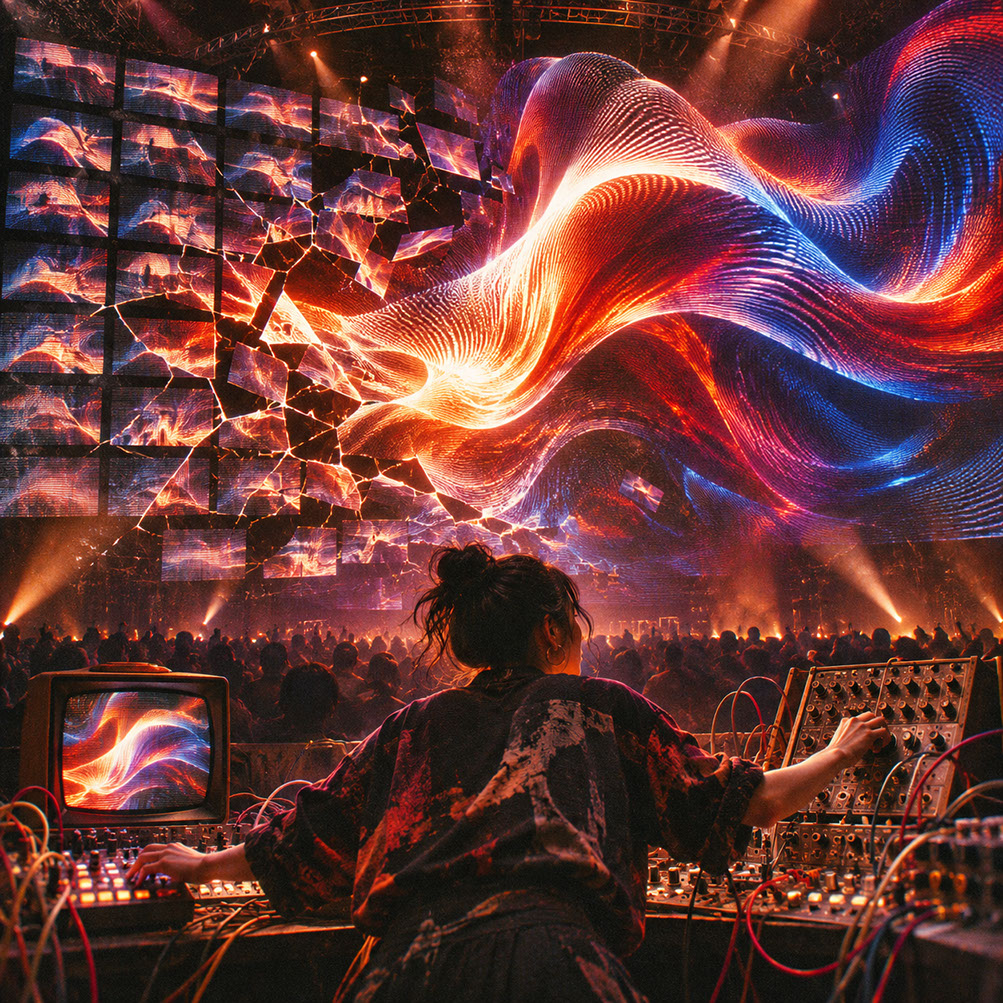
Episode 1 Hero Cover: Transitioning from static clip-launching grids to living, seed-based generative visual instruments that never repeat a frame.
Introduction: The 3 AM Moment That Changes Everything
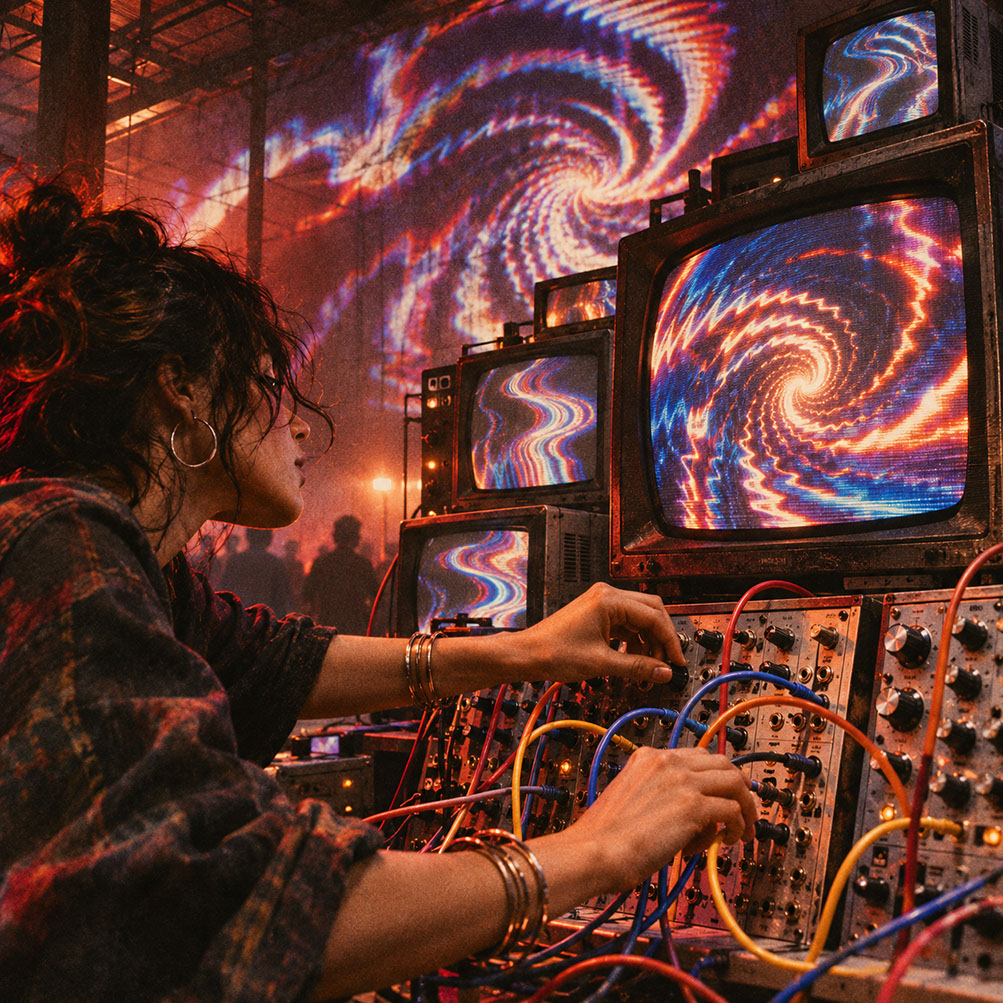
Picture this: it's 3 AM, the club is heaving, and you're stood behind your rig watching the DJ absolutely smash a build-up that's got the entire room holding their breath. Your finger hovers over the trigger for your drop animation—the same one you've fired a hundred times this month. The beat drops, the crowd erupts, and your perfectly rendered clip plays exactly as it did last night, and the night before, and every single night since you rendered it.
There's a disconnect here, isn't there? The DJ just read the room, extended that build by sixteen bars because they felt the energy was right, then surprised everyone with an unexpected flip. Meanwhile, your visuals remained frozen in their predetermined timeline, oblivious to the spontaneous magic happening on the decks.
This creative frustration is driving a fundamental shift in how we approach live visual performance. The clip-launching paradigm that has dominated VJ culture for over two decades is reaching its expiration date. In its place, something far more exciting is emerging: seed-based generative systems that never repeat the same frame twice.
Welcome to Episode 1 of our eight-part series exploring the future of live AV and VJ trends heading into 2027. Today, we're establishing the philosophical and practical foundations for a new era of visual performance—one where the screen becomes a living, breathing instrument rather than a glorified playlist.
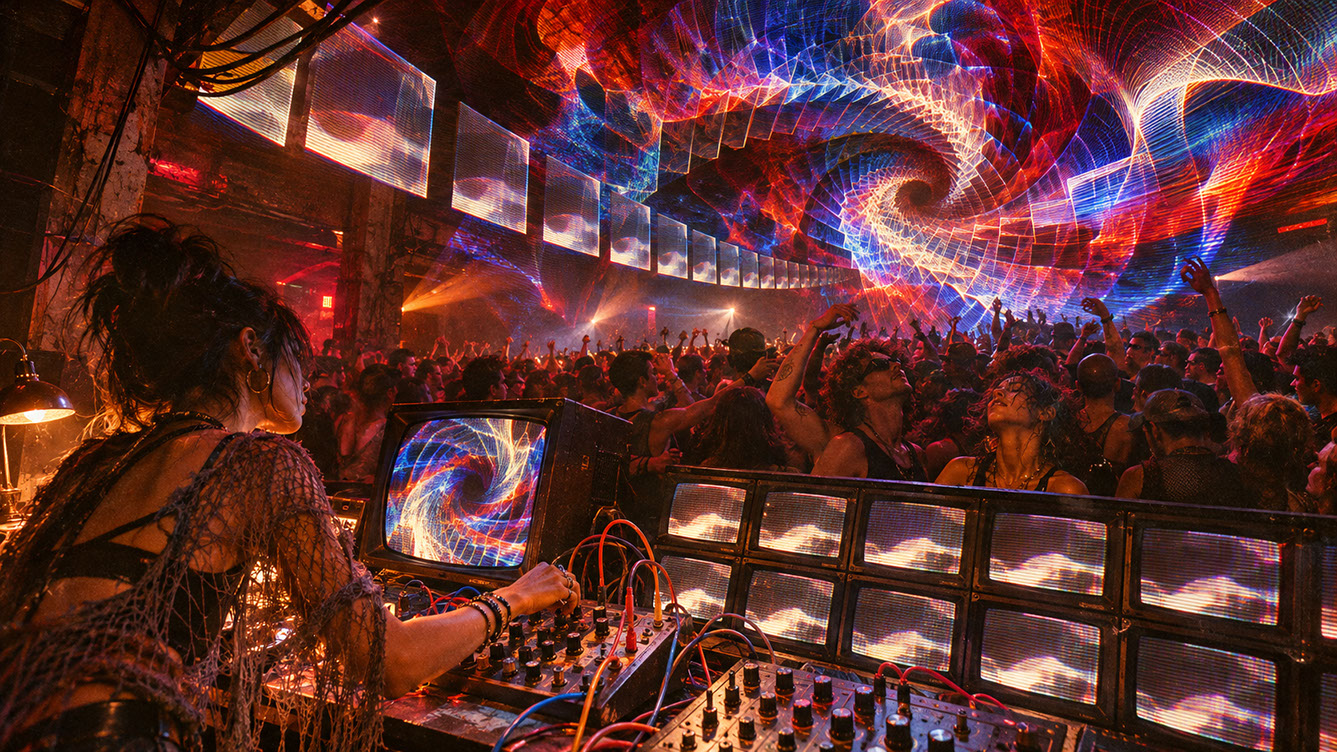 🔍 PLATE 01 — CLICK TO EXPAND
Plate 01 — The 3 AM Moment — Club VJ Realising Pre-Rendered Loops Cannot Match Live Musical Improvisation: Plate 01 (Introduction — The 3 AM Moment): The pivotal late-night realisation when static video loops fall short of an improvising DJ set.
Why Every Drop Feels Rehearsed: The Limitations of Clip-Based Performance
Let's be honest about the current state of affairs. Pre-rendered clips, whether they're MP4s, DXV files, or HAP-encoded monsters, all share one fundamental limitation: they play identically regardless of musical context. That stunning drop animation you spent three days rendering in Cinema 4D looks exactly the same whether it's soundtracking a peak-time moment or an awkward transition at 1 AM when the floor's half empty.
The audience feels this, even if they can't articulate it. There's a subtle visual déjà vu that creeps in when the same clips cycle through a night. Your visuals become wallpaper rather than performance—pleasant enough, but disconnected from the living energy of the set.
And here's the uncomfortable truth: when you're triggering pre-rendered media, you're not really performing. You're curating, sure. You're making decisions about timing and selection. But you're operating more like a jukebox than an instrumentalist. The creative work happened weeks ago when you rendered those files. Now you're just pressing play.
This disconnect leads to creative burnout. The cycle becomes exhausting: render clips, organise library, trigger clips, repeat. You find yourself performing someone else's finished work—even when that someone else is past-you. The desire to create in the moment, to respond and improvise, goes unfulfilled.
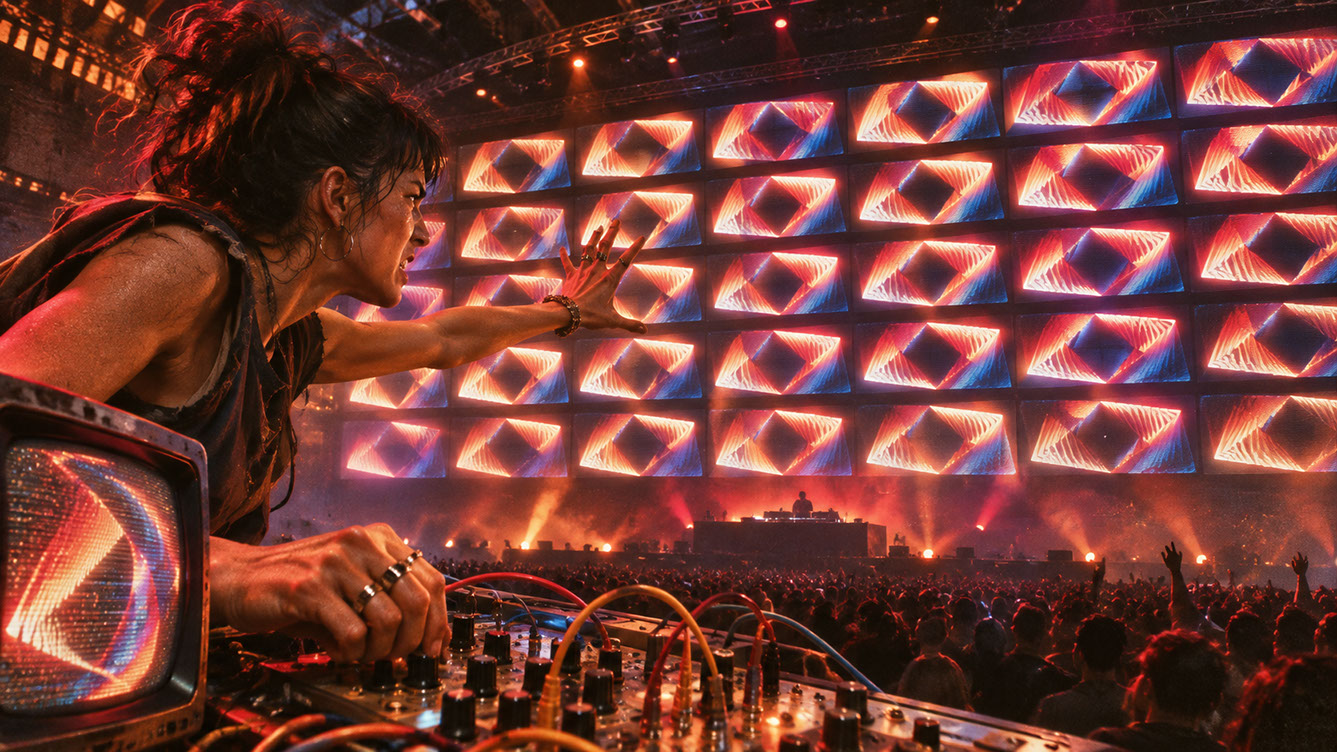 🔍 PLATE 02 — CLICK TO EXPAND
Plate 02 — Why Every Drop Feels Rehearsed — Visual Fatigue from Identical Pre-Rendered Drop Loops: Plate 02 (Limitations of Clip-Based Performance): How fixed-duration renders lock performers into predictable drops that audiences quickly recognise.
Seed-Based Systems: Why No Two Frames Should Ever Be Identical
So what's the alternative? Seed-based generative performance represents a fundamentally different approach to live visuals. Instead of triggering complete, finished outputs, you're controlling systems that generate visuals in real-time based on rules, parameters, and—crucially—external inputs like audio.
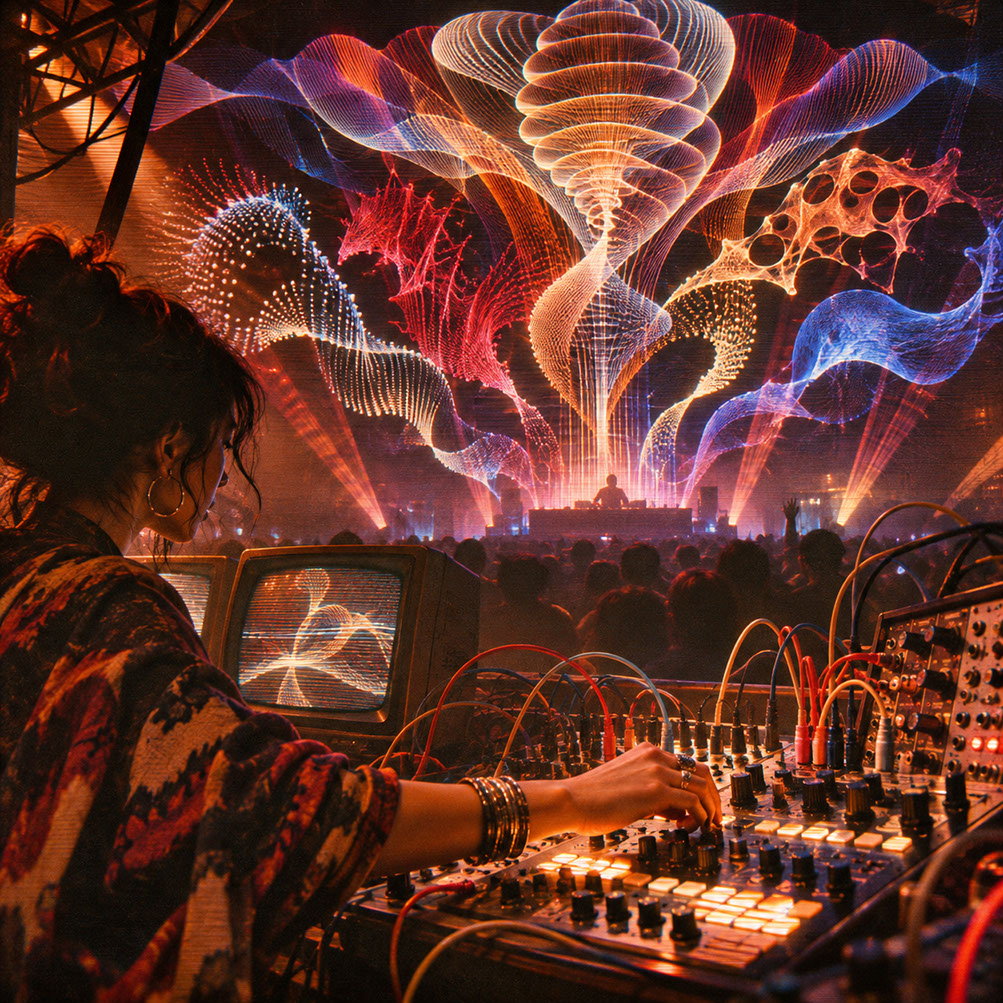
Think of it this way: a seed value is like a starting point for a procedural system. Feed the same seed into the same rules, you get the same output. But here's where it gets interesting: when your seeds are derived from live audio analysis, performer input, or real-time data, your visuals become genuinely responsive. The same underlying system produces infinite variations because its inputs are constantly changing.
This shifts your role from selector to performer. Instead of choosing which clip to play, you're shaping how visuals behave. Your vocabulary expands from "trigger drop animation" to controlling density, turbulence, colour temperature, scale, and movement. The visual output reflects your real-time decisions and the live musical context simultaneously.
Every show becomes genuinely unique—not through force of will or exhaustive library management, but because the system itself responds to conditions that are never identical twice.
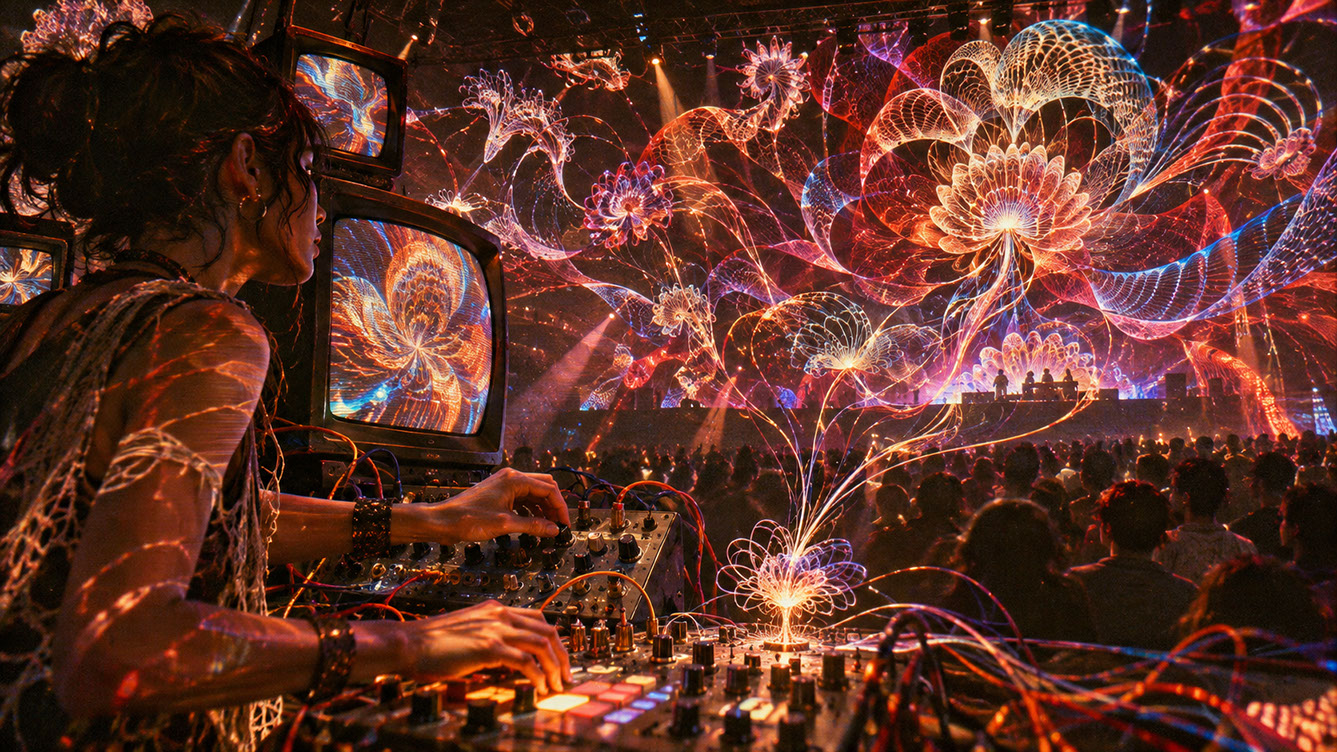 🔍 PLATE 03 — CLICK TO EXPAND
Plate 03 — Seed-Based Generative Systems — Controlled Mathematical Variability Driven by Live Audio: Plate 03 (Seed-Based Systems): Using deterministic noise seeds modulated by live performance data so no two frames ever repeat.
Clips as Textures, Masks, and Fallback Layers
Now, before you go deleting your entire clip library, let's be clear: this isn't about abandoning pre-rendered media entirely. It's about repositioning it within a more responsive architecture.
Your clips become ingredients rather than complete dishes. That beautiful abstract render you created? It can serve as a texture source feeding into a generative particle system. Your high-contrast animations become luminance masks that shape procedural geometry. Pre-rendered colour palettes provide reference points for generative colour systems.
There's also the reliability factor to consider. Live generative systems, particularly when pushing bleeding-edge techniques, can fail. Software crashes, parameters push into unstable territories, GPUs protest under load. Having pre-rendered media as a dependable fallback means you can experiment boldly during performance while maintaining a safety net that keeps the show alive.
This hybrid approach—reliability plus responsiveness—gives you the best of both worlds. Your renders feed and support generative systems rather than replacing them entirely.
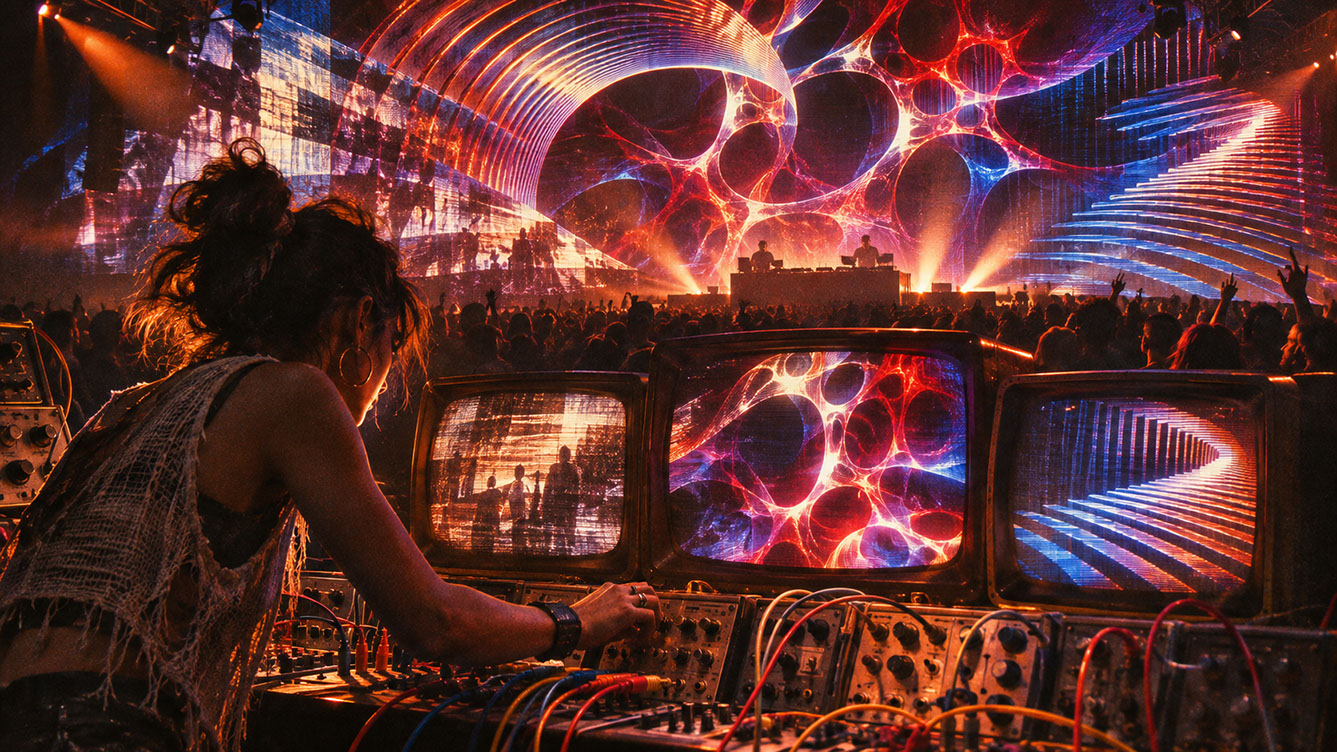 🔍 PLATE 04 — CLICK TO EXPAND
Plate 04 — Repurposing Pre-Rendered Clips as UV Displacement Textures, Luminance Masks & Fallbacks: Plate 04 (Clips as Textures & Masks): Turning legacy video loops into raw material for displacement shaders, luminance masks, and fail-safe backup layers.
The Three-Layer System Architecture
This thinking leads directly to a practical performance architecture that balances stability with creative freedom. Consider organising your visual output into three distinct layers:
Layer 1: The Dependable Base
This layer keeps your show alive no matter what. It's typically pre-rendered clips or simple procedural backgrounds that run continuously with rock-solid stability. If everything else fails, Layer 1 means you've still got visuals on screen. It's your safety net, always ready, never compromised.
Layer 2: The Reactive Generative Core
This is where the generative magic happens. Layer 2 responds to audio analysis (FFT data, transient detection, stem separation), MIDI input, OSC messages, and any other real-time data you're feeding into your system. Here you'll find your seed-based particle systems, evolving geometry, audio-reactive shaders—all the elements that make each frame genuinely unique.
Layer 3: The Human-Triggered Accent
This layer is for expressive control during quiet moments, build-ups, or when you want to make a deliberate visual statement. Manual triggers for visual punctuation, scene changes, or dramatic interventions. This is where your personality and timing shine through—the layer that reminds everyone there's a human performer behind the screen.
These layers interact through blend modes, opacity control, and switching logic. The base layer never stops; generative layers build on top; accent layers cut through when you decide they should.
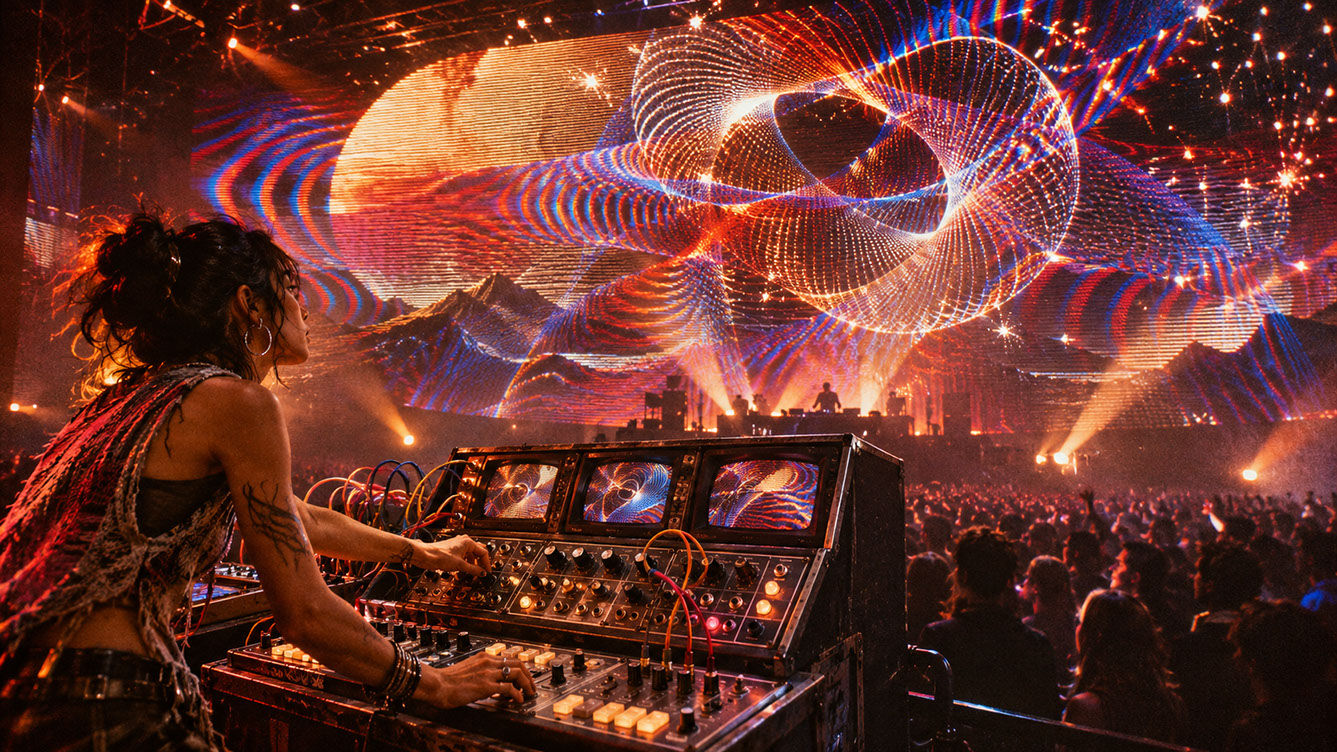 🔍 PLATE 05 — CLICK TO EXPAND
Plate 05 — The Three-Layer VJ System Architecture — Dependable Base, Reactive Core & Human Accents: Plate 05 (Three-Layer System Architecture): Balancing show reliability with creative spontaneity across base, reactive, and manual accent layers.
From Audio Input to LED Output: The Modern VJ Signal Chain
Understanding this architecture requires examining the technical signal flow that makes it possible. A typical generative VJ setup in 2027 follows a pipeline something like this:
Audio Input → FFT and Transient Analysis → MIDI/OSC Control Data → TouchDesigner or Notch → Procedural Geometry and Particles → Spout or NDI → Resolume Arena or disguise → LED Processor
Within this chain, it's crucial to understand the difference between continuous parameters and discrete events. Continuous parameters—things like scale, turbulence, colour shift, rotation speed—map beautifully to sustained audio features like bass energy or mid-range density. These should change smoothly, following the musical texture.
Discrete events—scene changes, visual resets, accent triggers—map to transients (kicks, snares, sharp attacks) or manual controls. These are instant switches rather than gradual transitions.
The modern rig can also integrate additional data sources: camera feeds for crowd shots or video feedback, sensor data for environmental response, performer tracking for position-aware visuals, and Ableton Link for rock-solid tempo and phase synchronisation with the DJ.
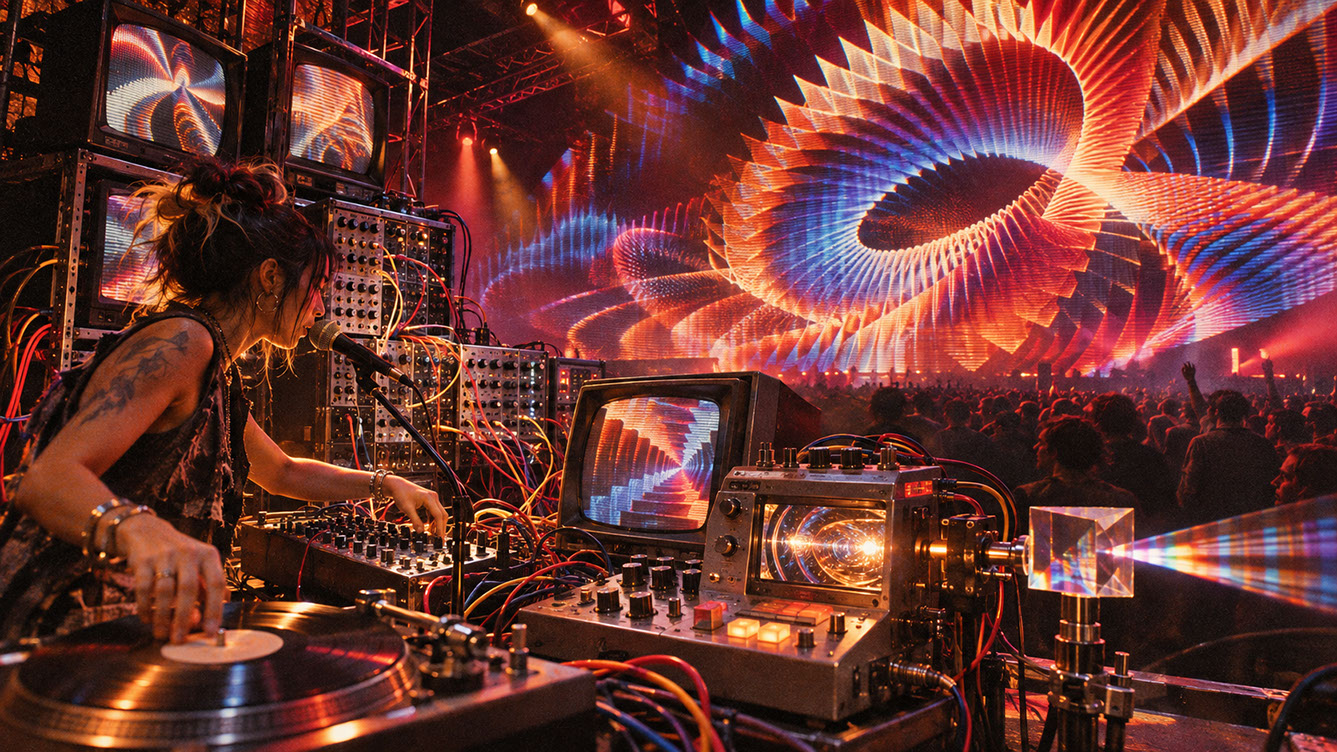 🔍 PLATE 06 — CLICK TO EXPAND
Plate 06 — From Audio Input to LED Wall Output — The Complete 2027 Generative VJ Signal Chain: Plate 06 (Modern VJ Signal Chain): Low-latency signal routing from front-of-house audio feeds through GPU generative engines to festival LED processors.
Evolving Rather Than Looping: Aesthetic Principles for Living Systems
Technical capability means nothing without clear aesthetic direction. Generative visuals have their own visual language, distinct from the perfectionism of pre-rendered loops.
Embrace unstable textures and slowly mutating forms. The aesthetic difference between a perfect seamless loop and organic evolution is profound. Subtle variation creates visual interest without chaos. Textures should breathe, shift, and transform over time rather than cycling identically.
Consider asymmetrical compositions responding to musical density. The centred, symmetrical tunnel flying towards you is a VJ cliché for a reason—it's safe. Break away from it. Let your compositions shift based on musical complexity: sparse visuals for quiet sections, dense compositions for peaks.
Implement restrained colour systems with intentional shifts. Rather than constant colour cycling (another cliché), work with limited palettes that evolve meaningfully. A shift from deep blue to acid green at an arrangement marker creates genuine impact. Colour becomes a structural element tied to musical form rather than decoration.
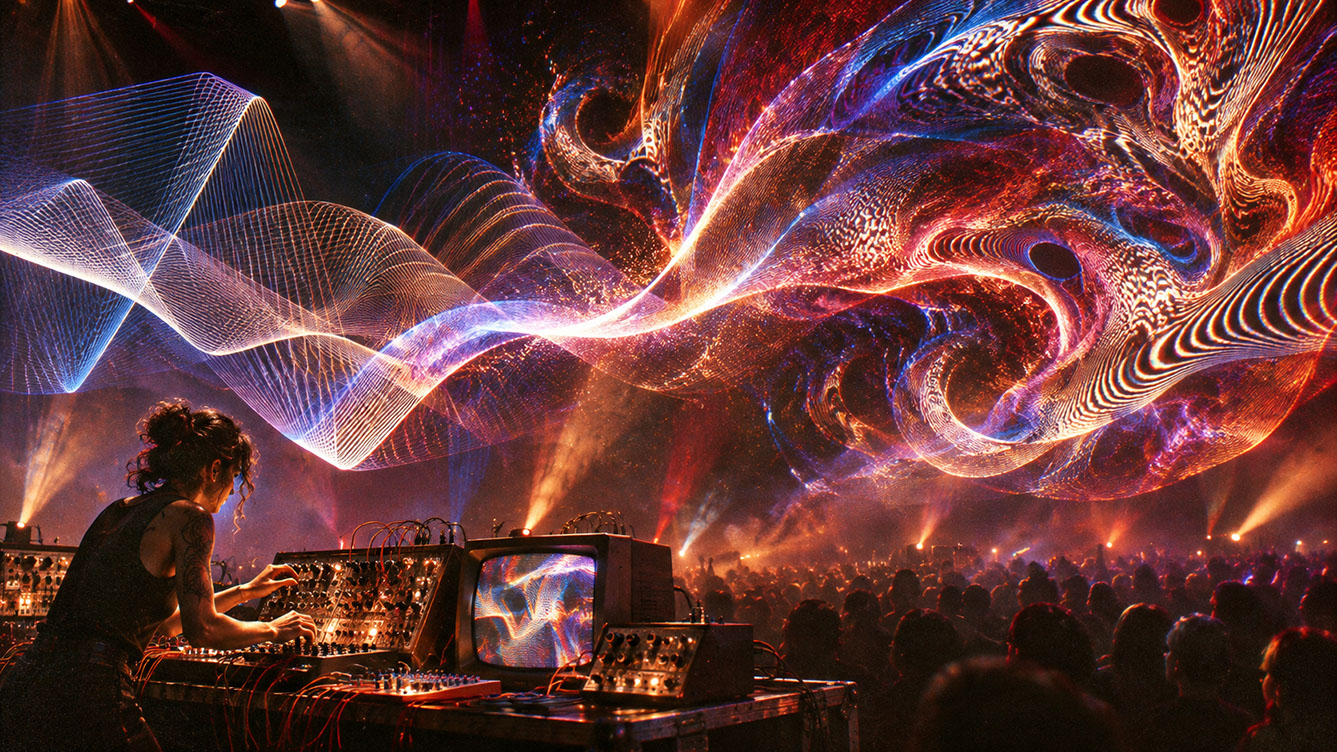 🔍 PLATE 07 — CLICK TO EXPAND
Plate 07 — Evolving Rather Than Looping — Organic Morphogenesis and Long-Arc Visual Progression: Plate 07 (Evolving Rather Than Looping): Designing generative state machines that breathe and transform across an entire musical set.
For DJs and Motion Designers: Your Entry Points
This new paradigm welcomes cross-disciplinary practitioners. If you're coming from DJing, you already understand more than you realise. Your stems can become separate visual drivers—kick energy expanding geometry, bass frequencies adding gravitational weight. Your cue points translate to visual scene markers. Your understanding of arrangement and energy flow applies directly to visual intensity mapping.
If you're coming from motion design, your After Effects compositions become texture sources. Your Cinema 4D geometry exports feed real-time particle systems. Render passes like depth and motion vectors become control signals. Your composition skills apply directly to generative framing.
The common ground? Both disciplines understand timing, phrasing, and audience attention. Both can contribute immediately whilst learning new tools. The goal is musical intuition plus visual craft plus technical execution—and you've already got at least one of those covered.
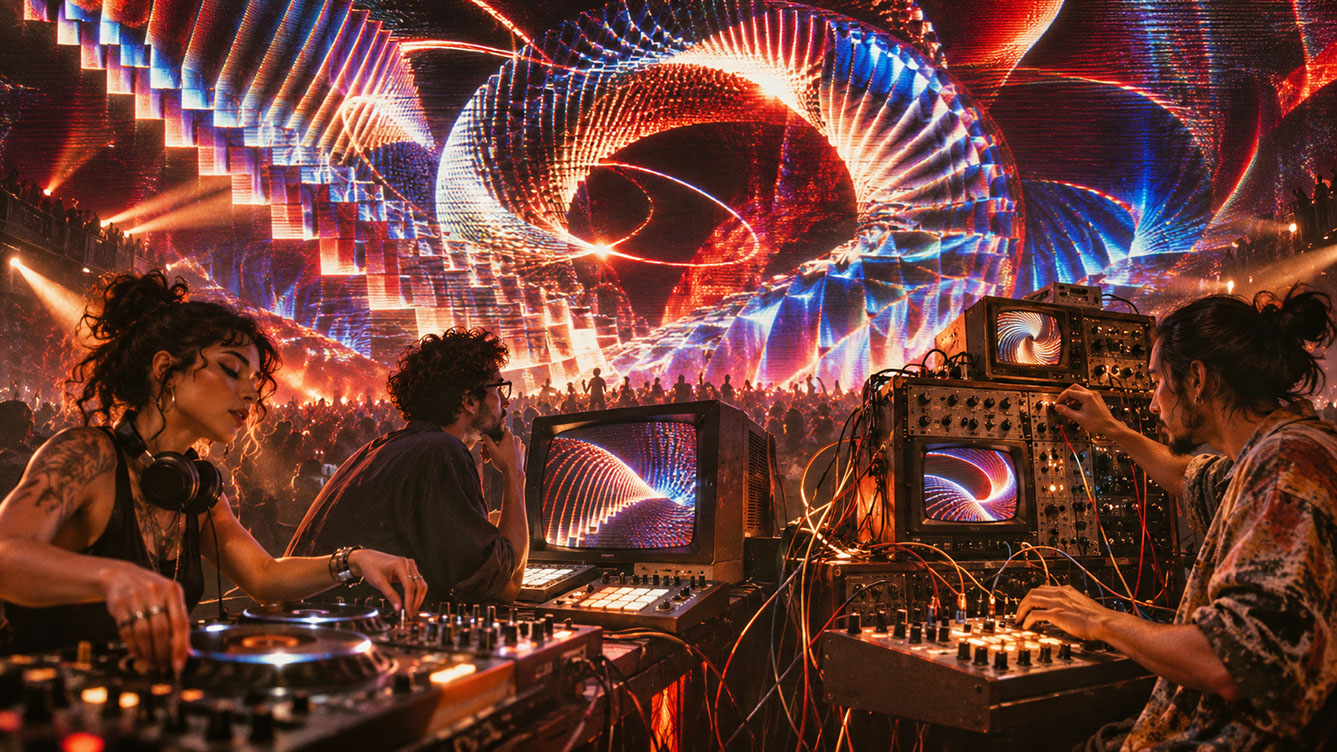 🔍 PLATE 08 — CLICK TO EXPAND
Plate 08 — Practical Entry Points — How DJs and Cinema 4D / After Effects Designers Transition to Live AV: Plate 08 (For DJs & Motion Designers): Translating existing timeline animation and synth modulation skills into real-time generative performance.
Conclusion: The Screen as Instrument
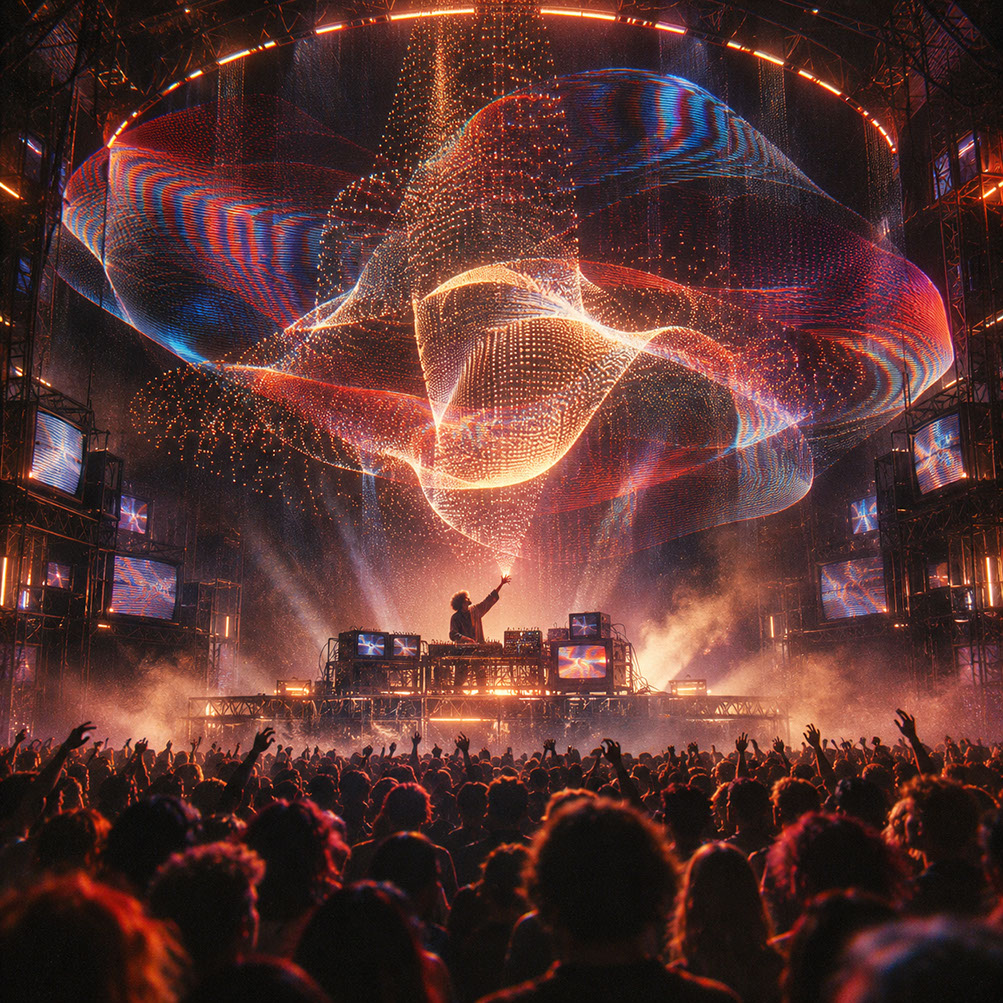
The clip-launching paradigm served us well for twenty years, but its creative limitations have become impossible to ignore. The future of visual performance lies in seed-based generative systems that respond, evolve, and surprise—systems that never repeat the same frame twice because they're listening to music that never plays the same way twice.
This doesn't mean abandoning your existing assets. Clips remain valuable as textures, masks, and fallback layers within a three-layer architecture that balances reliability with responsiveness. The tech stack connecting audio analysis through generative engines to final output is more accessible than ever, with free tools like TouchDesigner opening the door to experimentation.
Your call to action is simple: start this week. Add one audio-reactive generative layer to your existing clip-based setup. It might be a simple particle system driven by bass frequencies, or a shader that responds to transients. Experience the difference between playing back and performing. Feel what it's like when your visuals genuinely respond to the music.
The future screen is not a playlist—it's a living system that changes because the music, performer, and audience changed first.
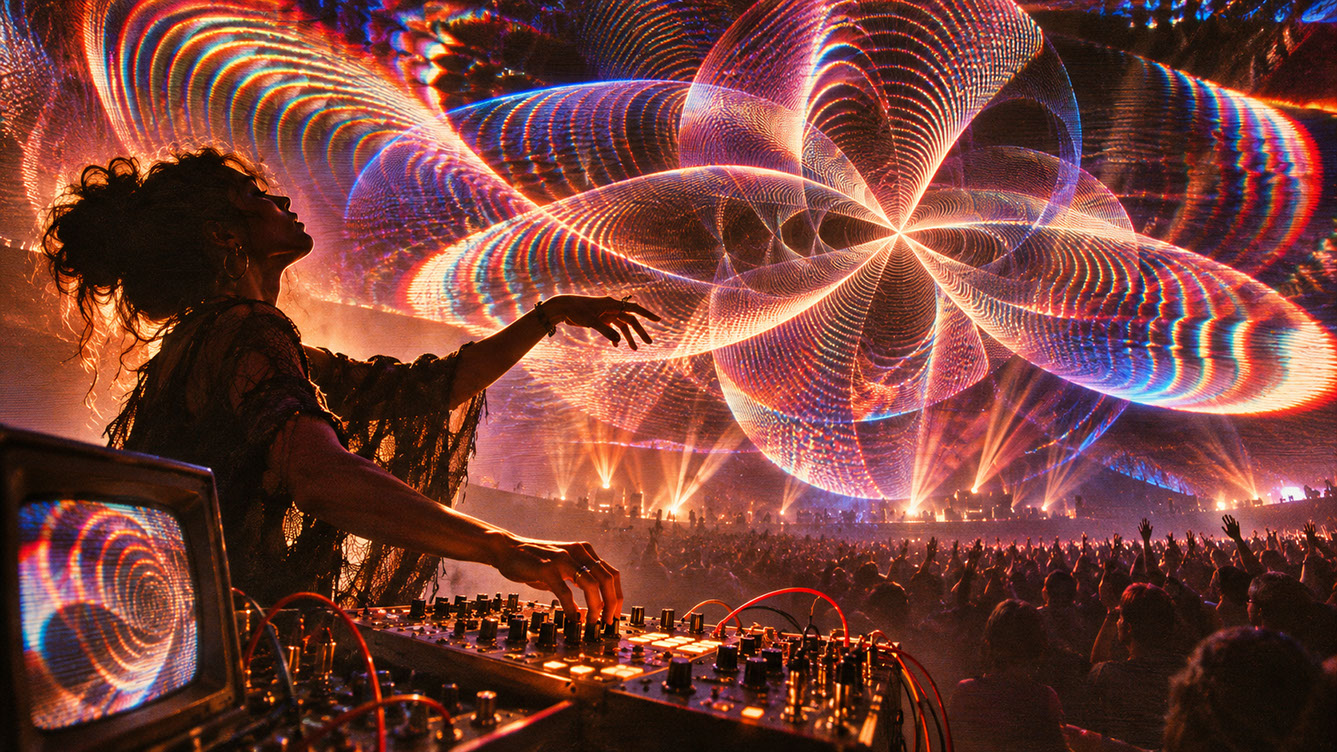 🔍 PLATE 09 — CLICK TO EXPAND
Plate 09 — Conclusion — The Screen Reborn as a Responsive Live Performance Instrument: Plate 09 (Conclusion — The Screen as Instrument): Human intentionality and generative architecture uniting to make every live show unrepeatable.
⚡ 5 Strategies to Consider
STUDIO PLAYBOOK // 5 DIRECTIVES❓ Frequently Asked Questions — 5 Q&As (5 Q&As)
SCHEMA.ORG/FAQPAGE // 5 Q&As (5 Q&As)Q1. Do I need to abandon all my existing clips to move to generative performance?
Not at all. Your existing clips become valuable texture sources, luminance masks, colour references, and fallback layers within a generative system. Rather than replacing clips entirely, you're repositioning them as ingredients that feed into and support responsive, real-time visual generation.
Q2. What's the minimum hardware requirement to start experimenting with generative VJ systems?
You'll need a capable GPU (modern NVIDIA cards work particularly well with TouchDesigner), an audio interface with good latency for real-time analysis, and software like TouchDesigner (which has a free non-commercial version) paired with Resolume or similar output software. Start with what you have and upgrade as you identify bottlenecks.
Q3. How long does it take to build a functional three-layer generative system?
Expect several weeks to build a functional foundation if you're new to the tools. However, you can start adding single generative elements to your existing setup immediately. The system grows through ongoing refinement as you perform live and discover what works for your particular style and musical context.
Q4. What's the difference between seed-based generation and simple randomness?
Seed-based generation uses controlled variability within defined rules—the same seed value produces the same output, but when seeds derive from live audio or performance data, you get infinite meaningful variations. Simple randomness lacks this control and can produce chaotic, disconnected results. Seed-based systems give you variability with intention.
Q5. How do generative visuals stay synchronised with live music when there's no fixed timeline?
Generative systems connect to audio through real-time analysis (FFT, transient detection) and synchronisation protocols like Ableton Link and MIDI clock. Rather than following a predetermined timeline, they respond to what's happening musically in the moment—bass frequencies might drive scale, transients trigger accents, and tempo data keeps everything phase-locked.
EXPLORE RELATED STUDIO TAGS (6):
Glad this piece sparked something — want the matching 4096×4096px .ZIP pack?
Enter your email below for an instant direct download of Studio Seamless Pattern Pack — Drop 01 (WPAY_DROP01.zip) plus new Studio Journal essays & free drops.