Beyond the 16:9 LED Wall: 7 Revolutionary Surface Technologies Transforming Live Visual Performance in 2027
Discover how transparent OLED, projection scrims, holographic meshes and kinetic elements transform live visual performance beyond traditional LED walls.
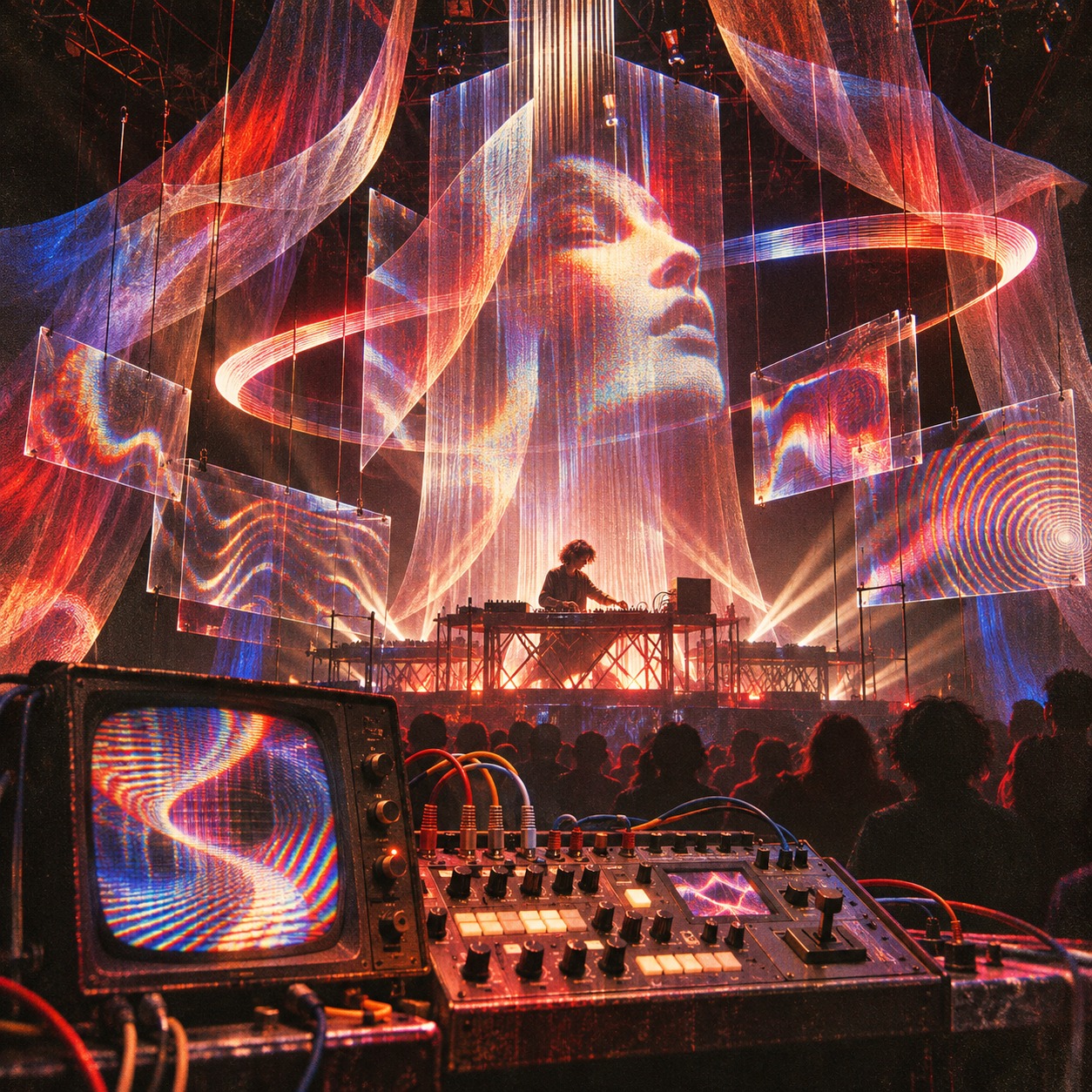 🔍 COVER PLATE — CLICK TO EXPAND
Episode 7 Hero Cover: Breaking free from the flat 16:9 LED rectangle to sculpt three-dimensional architectures of translucent light and motion.
The most exciting surface in 2027 may be the one that is partly invisible.
Here is a curious observation that might resonate with you: the rectangular LED wall has become so ubiquitous in live performance that audiences have stopped truly seeing it. When every festival stage features the same 16:9 canvas, the format itself becomes invisible—and not in a good way. It blends into expectation, fading into the background noise of visual convention.
This presents a genuine creative ceiling for visual directors everywhere. Flat LED walls dominate sightlines, compete with performers rather than framing them, and reduce visual design to the task of filling rectangles. The most innovative visual directors working today are asking a fundamentally different question: what if the screen behaved more like architecture?
In this episode, we explore the technologies and techniques that allow visual content to exist on multiple planes, appear and disappear, move through space, and interact with light, performers, and physical scenery in ways that flat panels simply cannot achieve. Welcome to the scenographic canvas.
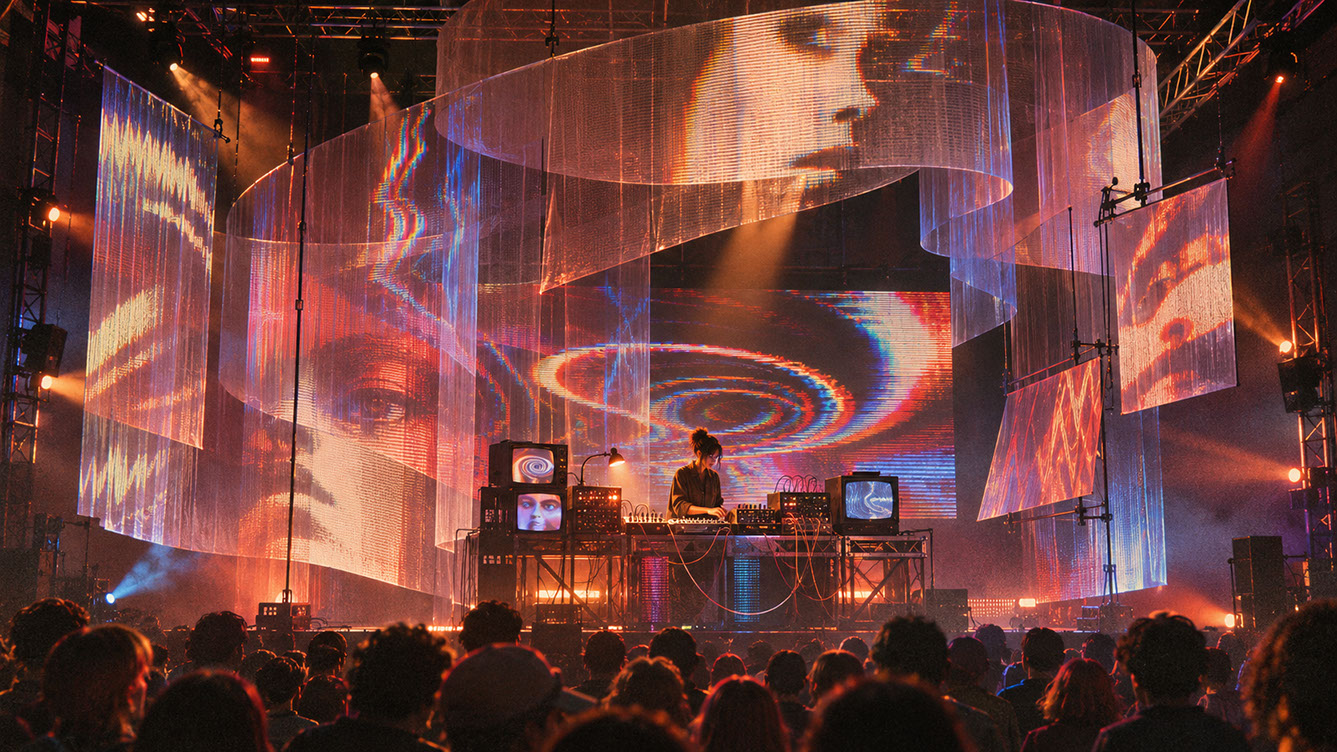 🔍 PLATE 01 — CLICK TO EXPAND
Plate 01 — Introduction — Escaping the Tyranny of the Flat 16:9 Rectangular Backdrop: Plate 01 (Introduction — Beyond the Flat Wall): Why 2027 stage designers are replacing giant television rectangles with spatial depth and material transparency.
Why Now? The Perfect Storm for Surface Innovation
The limitations of rectangular LED as the default canvas have become impossible to ignore. Visual content confined to a single plane creates what industry professionals call the 'television on stage' problem—a glowing rectangle that competes with performers rather than supporting them. Audiences have developed fatigue with familiar formats, and designers are increasingly hungry for something more.
This growing appetite for depth, layering, and interaction draws inspiration from immersive theatre, installation art, and exhibition design. Visual directors want content that performers can inhabit, not merely stand in front of. The desire is for visuals that wrap around the performance space, creating environments rather than backdrops.
Fortunately, advancing transparent display technology is finally making this vision practical. Transparent OLED panels are reaching practical brightness and reliability levels. New scrim and gauze materials designed specifically for projection are entering the market. LED mesh and curtain products now offer improved transparency ratios that genuinely balance visibility with see-through properties.
Perhaps most excitingly, the integration of kinetic systems with visual content has matured considerably. Automation systems capable of precise, repeatable movement can now provide real-time position feedback, enabling content to track moving surfaces with remarkable accuracy. The convergence of scenic automation and media server control opens entirely new creative possibilities.
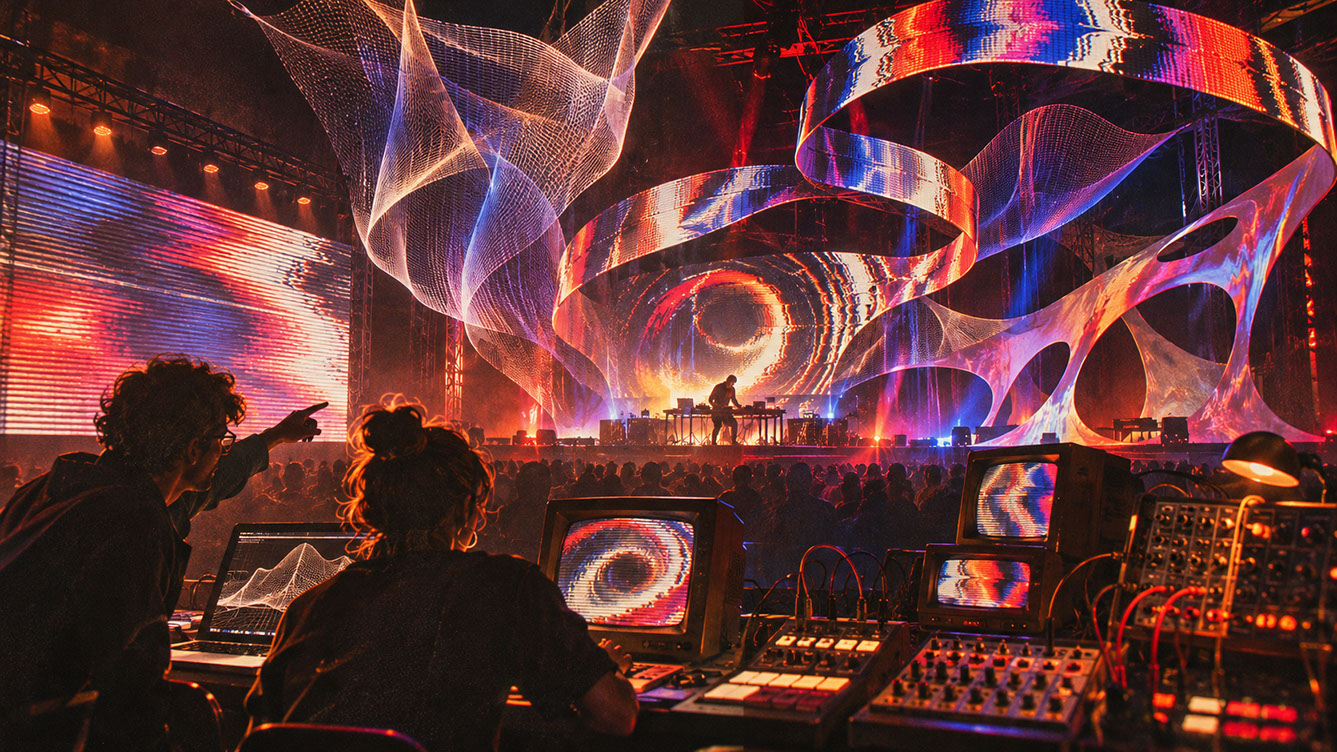 🔍 PLATE 02 — CLICK TO EXPAND
Plate 02 — Why Now — High-Lumen Laser Projectors, Blow-Through ROE Strips & Transparent OLED Maturity: Plate 02 (Perfect Storm for Surface Innovation): Lightweight touring hardware and real-time 3D calibration making multi-surface scenography tour-viable.
Surface Technologies Deep Dive
Transparent OLED Capabilities and Constraints
Transparent OLED technology offers genuine transparency whilst displaying vibrant imagery—a remarkable technical achievement. Current panels achieve transparency percentages that allow meaningful visibility through the display, though brightness limitations compared to conventional LED mean they work best in controlled lighting conditions or as layering elements rather than primary high-brightness displays.
Best use cases include close viewing distances, controlled ambient light environments, and layered compositions where the transparency itself becomes a design element. Installation considerations include weight, mounting requirements, power consumption, and heat management.
Gauze and Scrim Materials for Projection
Traditional theatrical materials like sharkstooth scrim offer bidirectional properties that have been refined over decades of stage use. When lit from the front, they appear opaque; when lit from behind, they become transparent. This simple principle enables powerful theatrical reveals.
Holo gauze and holographic mesh materials are designed specifically for front-projection pepper's ghost effects, creating the illusion of floating imagery. Viewing angle dependencies and optimal projection angles require careful planning, and the critical relationship between ambient light control and scrim visibility cannot be overstated—these materials need darkness to work their magic.
Holographic Mesh Properties
The distinction between monofilament and woven mesh characteristics matters enormously for visual quality. Gain, viewing cone, and hotspot considerations affect how imagery appears from different audience positions. Installation tension requirements must be precise for optimal image quality, and layering multiple meshes at different depths creates genuinely three-dimensional visual environments.
Kinetic LED Panels and Moving Elements
Winch-driven LED panels with real-time position tracking can transform throughout a performance, creating dynamic spatial relationships. Rotating and pivoting LED surfaces add another dimension of movement. LED curtains and flexible substrates conform to curved structures. Integration challenges—cable management, signal continuity during motion—require careful engineering but are increasingly well-understood.
Hybrid Approaches
The most sophisticated installations combine multiple surface types. Transparent OLED layered with projection scrims creates depth impossible to achieve with either technology alone. Kinetic elements can reveal and conceal different surface types throughout a performance. Multiple semi-transparent layers at different distances establish genuine spatial depth that audiences perceive instinctively.
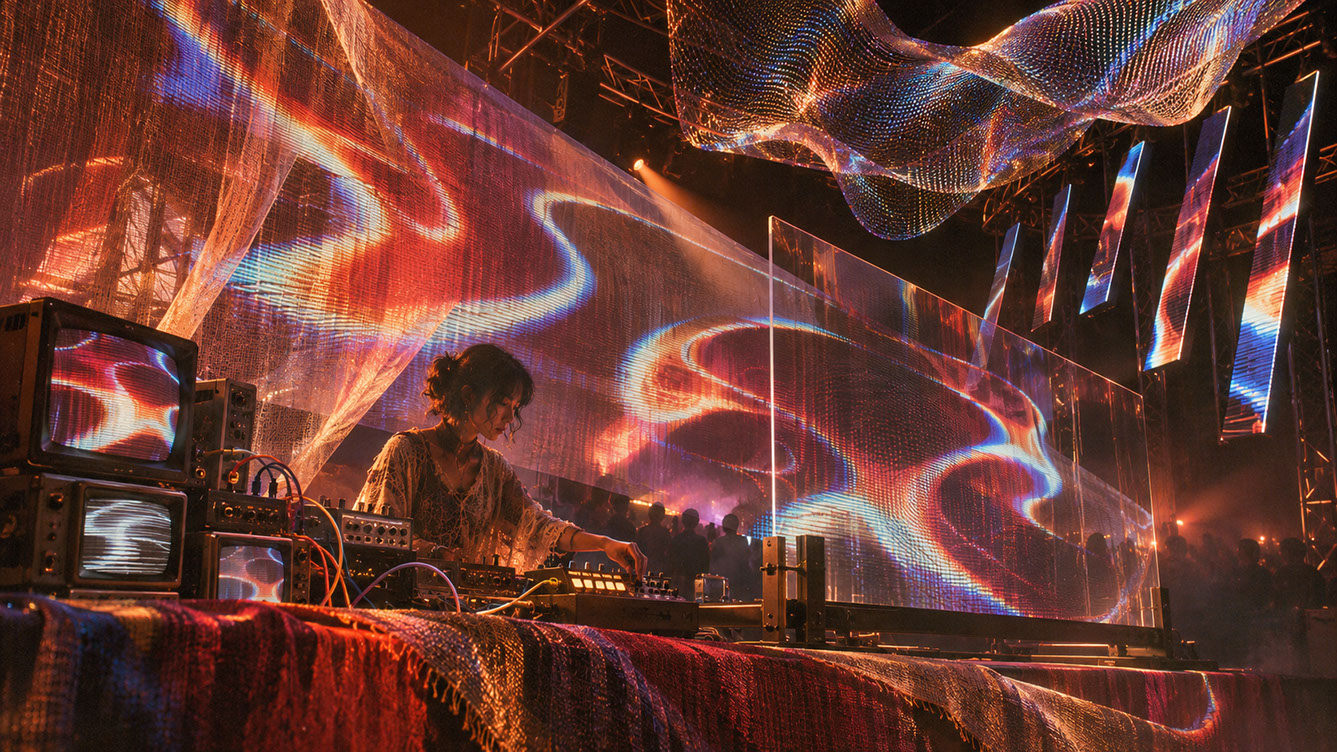 🔍 PLATE 03 — CLICK TO EXPAND
Plate 03 — Surface Technologies Deep Dive — Transparent OLED, Scrims, Holographic Mesh & Kinetic Winches: Plate 03 (Surface Technologies Deep Dive): Optical properties, transparency ratios, and rigging constraints across seven non-standard projection and emissive surfaces.
Core Tech Stack and Signal Flow
The Scenic Mapping Pipeline
The journey from concept to multi-surface output follows a clear progression:
Pre-Production Phase:
Begin with a 3D venue survey using photogrammetry, LiDAR, or careful manual measurement. Construct a digital twin in previz software, then create content with geometry, surface properties, and sightlines considered from the very start.
System Architecture:
Content flows from Unreal Engine, TouchDesigner, or disguise, mapped to calibrated surfaces through media servers with projection warping and edge blending capabilities, then to projection and LED processors with lighting and kinetic control integration.
Incorporating Physical Constraints Early
Successful multi-surface design requires addressing physical constraints from the beginning. Geometry considerations include non-planar surfaces, angles, and curves. Lensing factors involve throw distances, projector positions, and lens shift capabilities. Brightness matching between LED and projection output requires careful calibration, as does colour consistency across different surface types and display technologies. Perhaps most critically, content may appear quite differently from different audience positions—what looks spectacular from the mixing desk might be problematic from the extreme sides.
Addressing Moving Elements
Real-time position data from automation systems enables content to track moving surfaces without visible misalignment. Handling audience sightline changes as elements move requires content designed with flexibility in mind. Safety interlocks between kinetic systems and visual cues ensure that ambitious creative visions never compromise performer or audience safety.
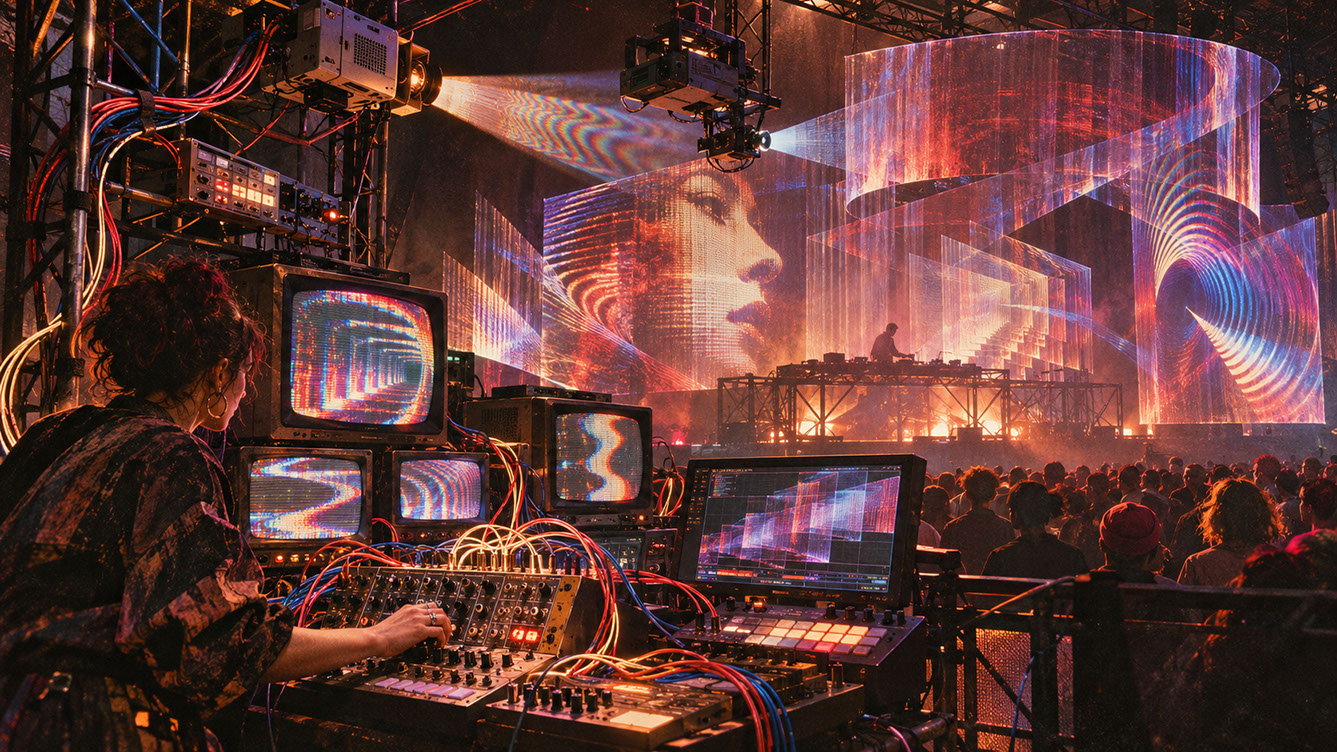 🔍 PLATE 04 — CLICK TO EXPAND
Plate 04 — Core Tech Stack & Signal Flow — 3D UV Projection Mapping & PosiStageNet Kinetic Tracking: Plate 04 (Core Tech Stack & Signal Flow): Feeding live automation winch coordinates into media servers so projected pixels stay locked to moving scenic elements.
Aesthetic Language and Visual Direction
Layering Translucent Materials
One of the most powerful principles in multi-surface design is restraint: not filling every surface with content simultaneously. Using transparency creates depth relationships between layers that feel genuinely three-dimensional. Selective activation—some surfaces dark whilst others illuminate—allows attention to be directed precisely. The interplay between foreground, midground, and background planes gives visual compositions genuine spatial presence.
Shadows, Silhouettes, and Moiré
Designing content that creates intentional shadows on surfaces behind adds another layer of visual complexity. Performer silhouettes become compositional elements rather than accidents. Some designers even embrace moiré patterns between mesh layers as intentional visual texture—the aesthetic of interference and interaction becoming part of the visual language.
Kinetic Movement as Choreographic Event
Resist the temptation to keep elements constantly moving. Movement works best as punctuation: marking musical sections, dramatic moments, emotional shifts. Synchronising kinetic motion with musical phrasing creates moments of genuine theatrical power. The reveal—using movement to transform spatial relationships—becomes an event in itself.
Designing for Revelation and Concealment
Content can appear through scrims when backlit, surfaces becoming opaque or transparent based on lighting state. This theatrical vocabulary of appearance and disappearance has been refined over centuries of stage design, and now visual directors can apply these principles to digital content in remarkably sophisticated ways.
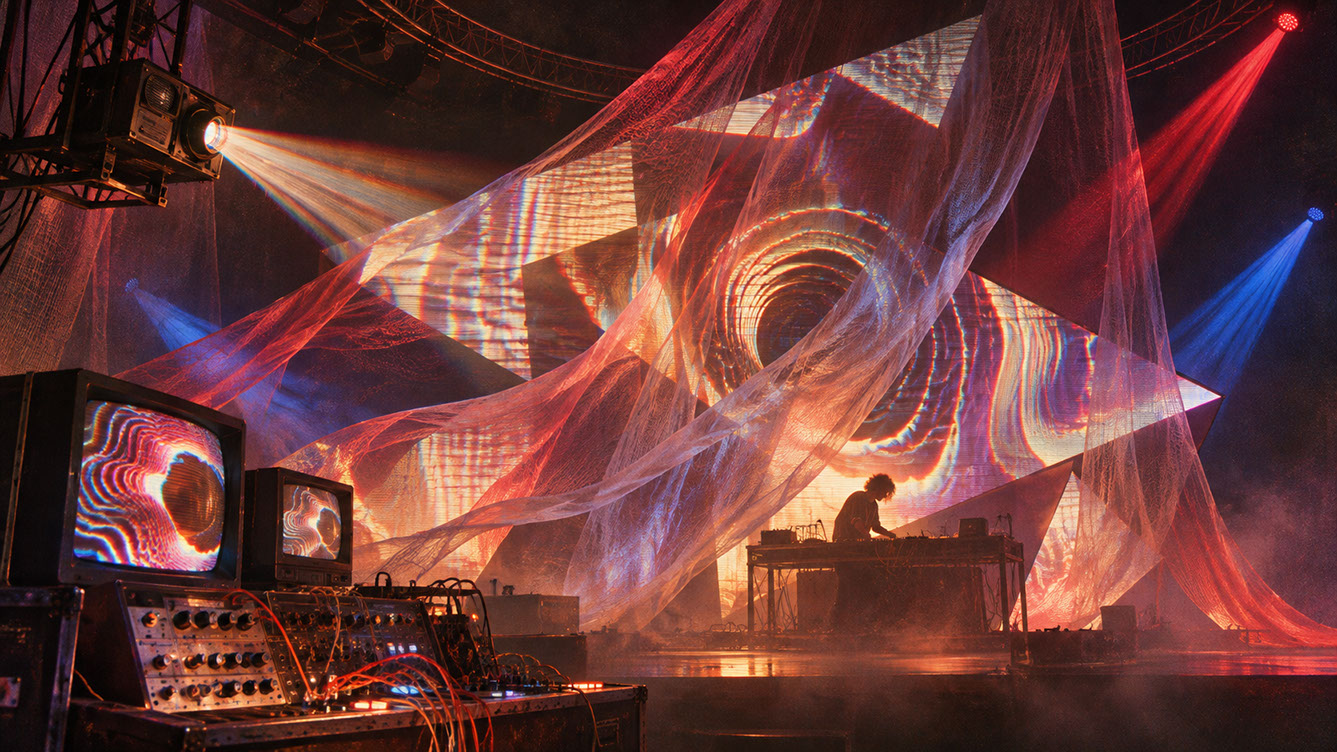 🔍 PLATE 05 — CLICK TO EXPAND
Plate 05 — Aesthetic Language — Designing With Negative Space, Silhouettes & Translucent Depth: Plate 05 (Aesthetic Language & Visual Direction): Why black is transparency on scrims and OLEDs—choreographing revelation, concealment, and depth.
Practical Patch Insight: Digital Twin Testing
Building Digital Twins Before Content Production
Create accurate 3D models of your venue or stage architecture before producing content. Include surface properties—transparency, reflectivity, viewing angles—in your models. Model projector positions, LED placement, and audience areas. Use game engines or previz software for real-time exploration of how content will actually appear.
Testing from Multiple Viewpoints
Avoid the trap of only checking the idealised front centre view. Examine content from extreme audience positions. Consider camera positions for broadcast or IMAG. Check what operator monitor positions actually show versus the reality of the space.
Simulating Moving Elements
Test kinetic sequences in previz before physical load-in. Check for content misalignment during motion. Evaluate changing occlusion as elements move. Time kinetic cues with musical and visual events.
Iterating Before Commitment
Make composition decisions when changes are cheap—during previz rather than on site. Test colour balance across different surface types. Evaluate brightness matching between projection and LED. Document decisions thoroughly for consistent reproduction across multiple shows or venues.
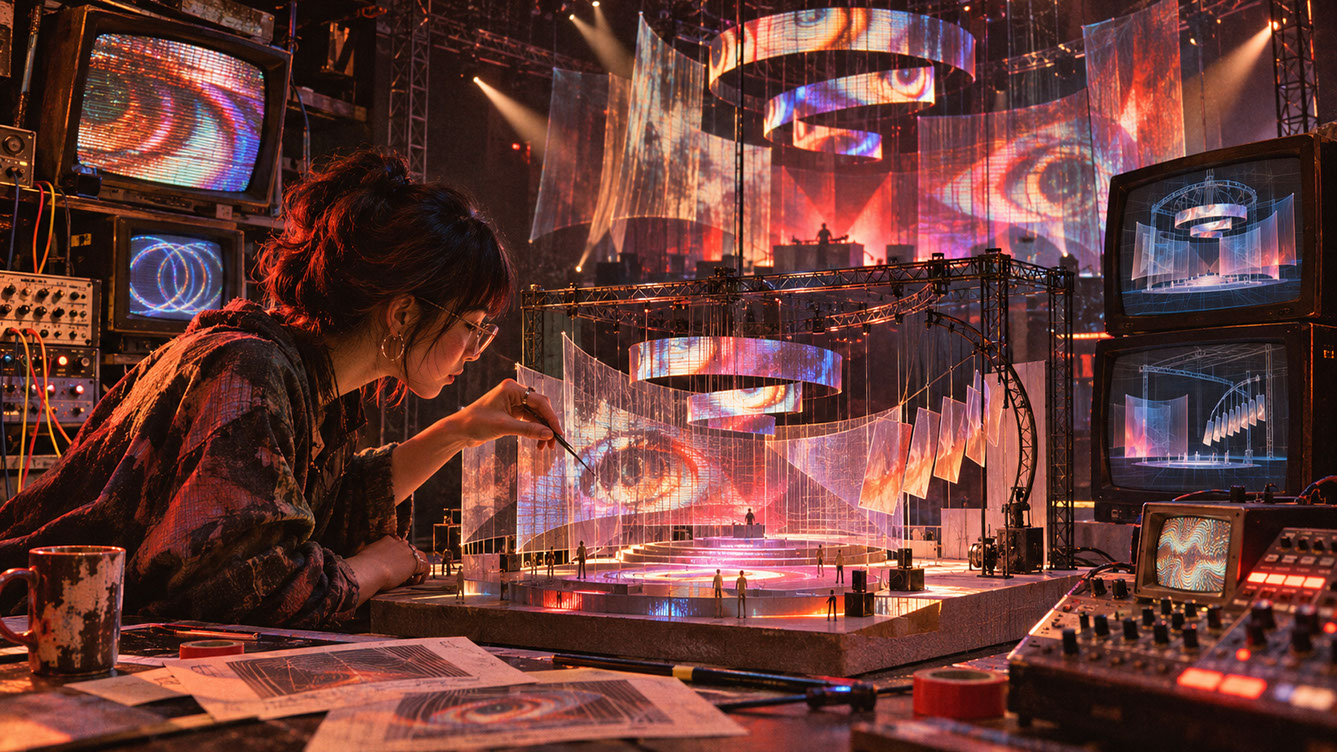 🔍 PLATE 06 — CLICK TO EXPAND
Plate 06 — Practical Patch Insight — Pre-Visualising Sightlines, Moiré & Kinetic Collisions in a Digital Twin: Plate 06 (Digital Twin Testing): Simulating optical transmission, projector throw shadows, and off-axis sightlines in 3D before stepping into the venue.
Cross-Disciplinary Bridge: Earlier Creative Collaboration
For Lighting Designers
Your knowledge of contrast, beam angle, and audience focus translates directly to multi-surface visual design. Understanding how lighting states affect scrim transparency and projection visibility is invaluable. Coordinating lighting cues with kinetic movement and content changes creates unified experiences. The collaborative opportunity here is enormous: lighting and visuals designed as one integrated system rather than competing elements.
For Stage Architects and Scenic Designers
Earlier collaboration with real-time visual artists transforms what is possible. Designing scenic elements with projection and LED integration in mind from the start enables solutions impossible to retrofit. Understanding surface properties that support visual content—reflectivity, texture, colour—becomes part of the scenic design vocabulary. Structural considerations for kinetic visual elements need attention early in the design process.
For Motion Designers
Designing content for non-planar surfaces requires rethinking compositional assumptions. Understanding how compositions change when mapped to unusual geometries is essential. Planning for changing occlusion as kinetic elements move affects how content should be structured. Creating content that works across multiple surface types with different properties demands flexibility.
The Case for Earlier Collaboration
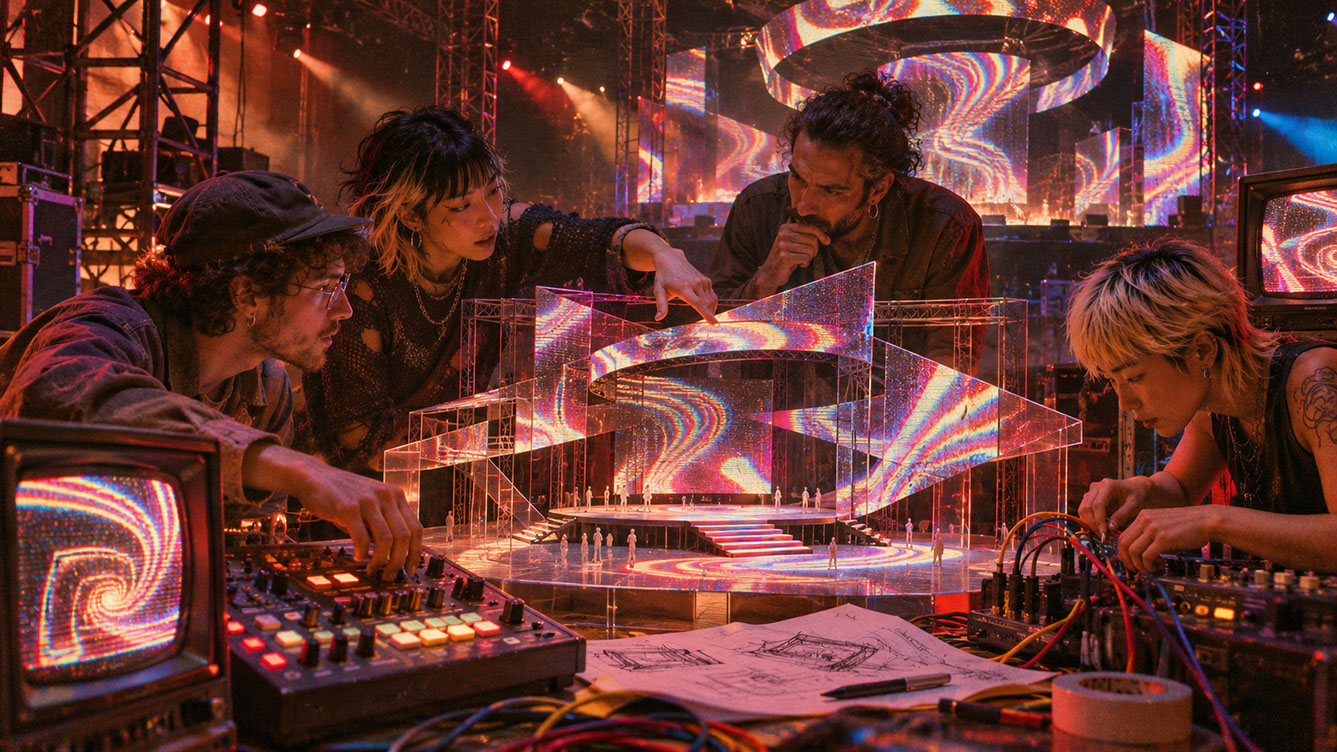
Breaking down traditional departmental boundaries unlocks creative possibilities that siloed working simply cannot achieve. Integrated design sessions bringing lighting, scenic, and visual teams together from the earliest concept stages create coherence. Shared previz environments where all disciplines can contribute enable genuine co-creation. The production value gained when specialisms inform each other is immediately visible to audiences.
 🔍 PLATE 07 — CLICK TO EXPAND
Plate 07 — Cross-Disciplinary Bridge — Uniting Stage Architects, Lighting Designers & VJs from Concept Day One: Plate 07 (Earlier Creative Collaboration): Co-designing lighting angles, scrim fabrics, and video content as a single unified instrument.
Conclusion: The Architecture of Light
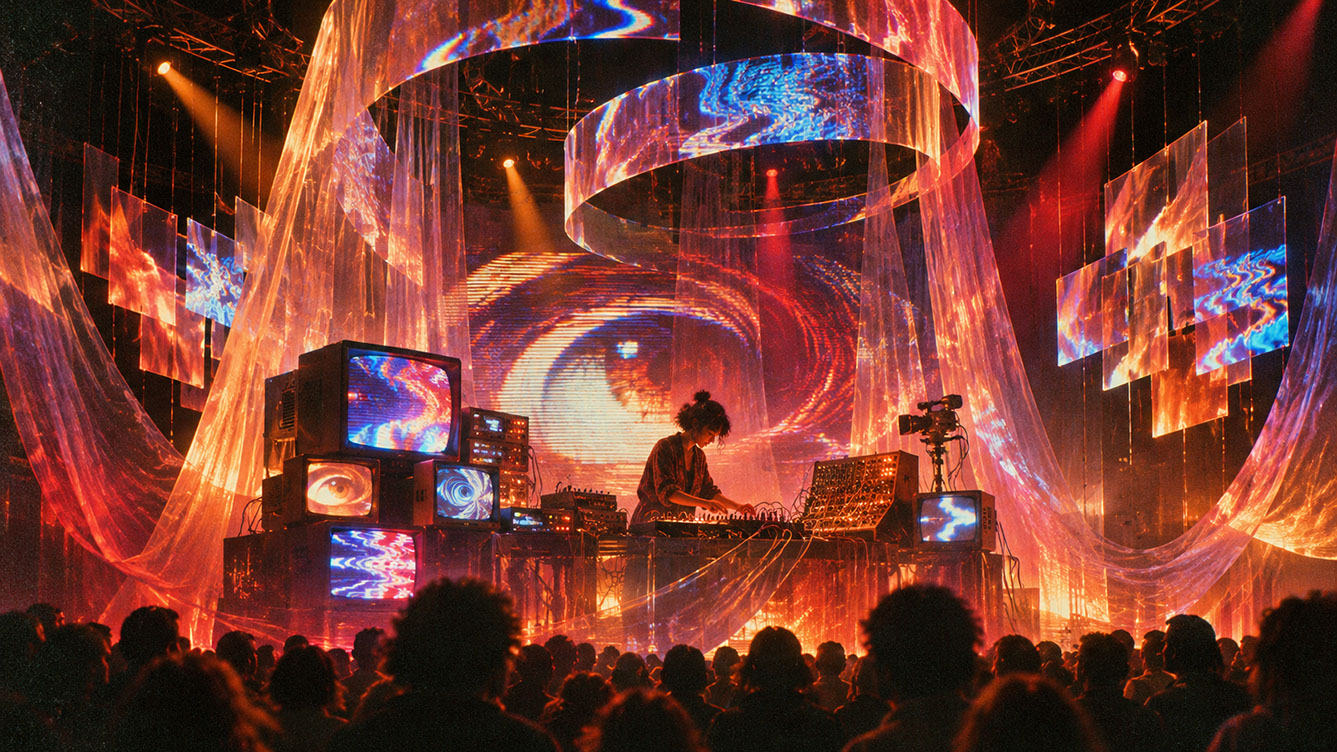
The rectangular LED wall is not the only canvas available to you. The year 2027 offers visual directors an expanding palette of surfaces, depths, and movements that can transform stages into responsive architectural experiences.
This expanded capability does introduce complexity and potential failure points. The best implementations balance creative ambition with robust system design and thorough testing. Digital twins, cross-disciplinary collaboration, and careful attention to the viewing experience from all audience positions distinguish professional results from impressive-but-problematic experiments.
Start experimenting with layering, transparency, and movement in your current work—even at small scale. Build digital twins of upcoming projects. Initiate earlier conversations with lighting and scenic collaborators. Treat surfaces as creative partners rather than passive display rectangles.
Sometimes what makes a visual experience memorable is not what you show, but how you reveal and conceal it. The scenographic canvas awaits your vision.
 🔍 PLATE 08 — CLICK TO EXPAND
Plate 08 — Conclusion — The Stage Reborn as a Living, Three-Dimensional Architecture of Light: Plate 08 (Conclusion — The Architecture of Light): Dissolving the screen into spatial scenography that surrounds and moves with the music.
⚡ 5 Strategies to Consider
STUDIO PLAYBOOK // 5 DIRECTIVES❓ Frequently Asked Questions — 5 Q&As (5 Q&As)
SCHEMA.ORG/FAQPAGE // 5 Q&As (5 Q&As)Q1. Is transparent OLED bright enough for outdoor festival stages?
Transparent OLED currently works best in controlled lighting conditions rather than bright outdoor environments. The technology excels at close viewing distances with managed ambient light, making it ideal as a layering element in hybrid setups rather than a primary high-brightness display. For festival stages, consider combining transparent OLED with conventional LED panels to achieve both transparency effects and sufficient brightness.
Q2. How do I choose between projection scrims and LED mesh for a live show?
The choice depends on venue conditions, budget, and creative intent. Projection scrims require darkness and controlled viewing angles to work effectively, but offer excellent image quality and theatrical reveal possibilities. LED mesh produces its own light, working in brighter environments, but has resolution limitations. Consider whether you need the material to appear and disappear (favouring scrims) or maintain visibility regardless of lighting state (favouring LED mesh).
Q3. Can kinetic stage elements respond to music in real time?
There is an important distinction between pre-programmed kinetic sequences synchronised to timecode and truly reactive motion driven by live audio analysis. Safety considerations limit how quickly kinetic systems can respond to unexpected inputs, as automation systems require acceleration curves and position verification. Most professional implementations use carefully timed sequences rather than fully reactive motion, though position feedback systems can enable content to track moving elements in real time.
Q4. What software handles multi-surface projection mapping effectively?
Established media servers including disguise, Resolume Arena, and TouchDesigner all offer multi-surface mapping capabilities with varying strengths. The choice depends on your existing workflow, the complexity of your surface geometry, and integration requirements with lighting and automation systems. Testing complete workflows with your actual hardware before committing to a platform is essential, as each system handles edge cases differently.
Q5. Why should I build a digital twin before producing content for multi-surface shows?
Digital twins allow you to make composition decisions when changes are inexpensive—during pre-production rather than expensive on-site time. You can test content from multiple audience viewpoints, evaluate brightness matching across different surface types, simulate kinetic sequences, and identify potential problems before load-in. This investment in previz consistently saves time and budget whilst improving final results.
EXPLORE RELATED STUDIO TAGS (6):
Glad this piece sparked something — want the matching 4096×4096px .ZIP pack?
Enter your email below for an instant direct download of Studio Seamless Pattern Pack — Drop 01 (WPAY_DROP01.zip) plus new Studio Journal essays & free drops.