Future of Live AV & VJ Trends 2027: 8 Bold Shifts That Will Redefine Visual Performance
Explore our 8-part 2027 forecast on live AV and VJ trends: generative patches, real-time AI, CRT video synthesis, stem reactivity, and spatial stages.
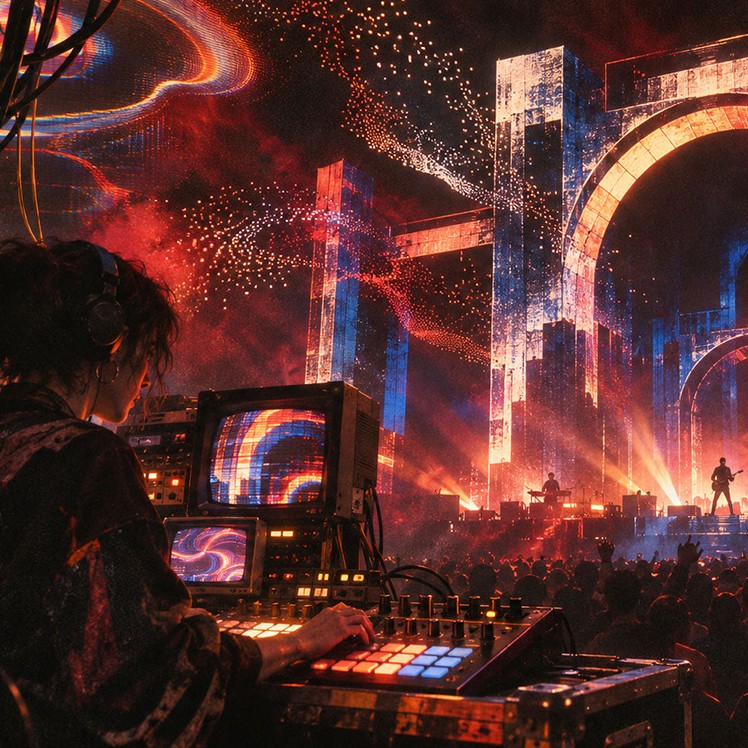 🔍 COVER PLATE — CLICK TO EXPAND
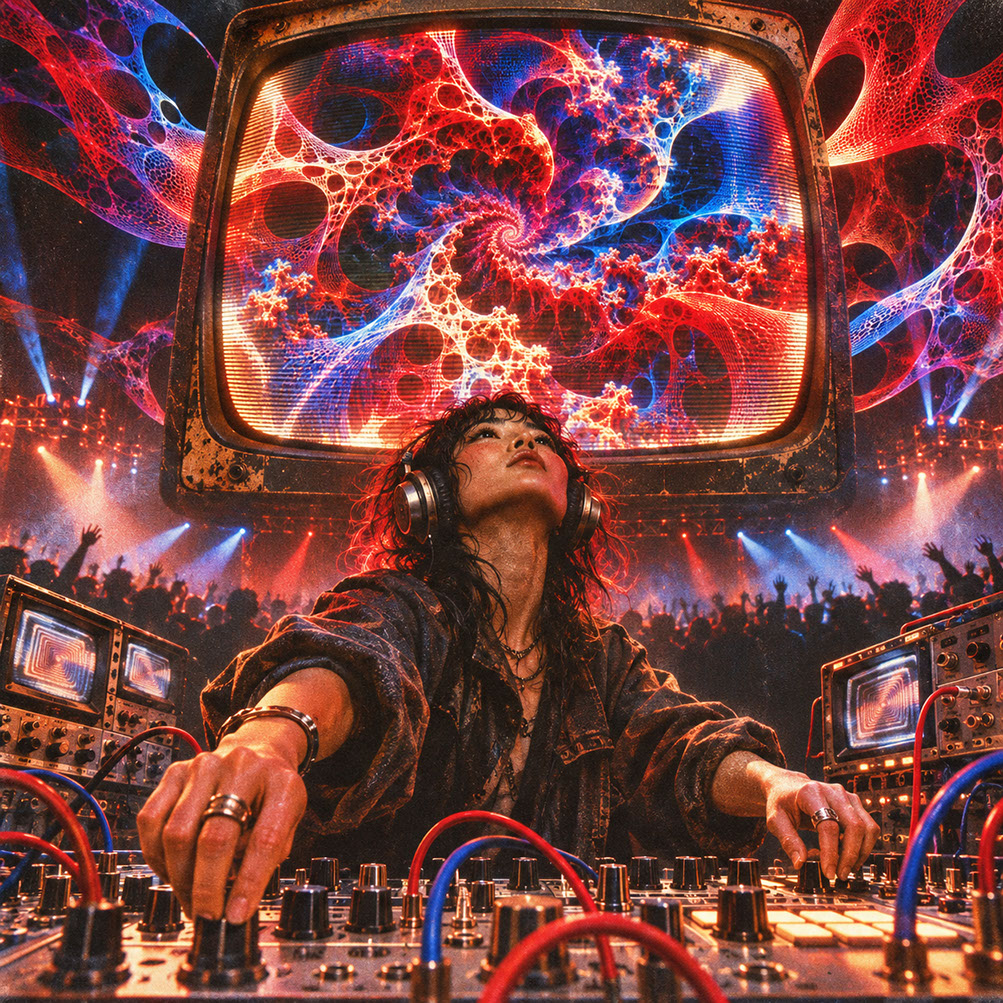
Series Hero Cover: A live visual performer sculpts real-time generative projections, CRT feedback, and volumetric stage lighting across a multi-layered 2027 audiovisual arena.
Welcome to what might be the most exciting era in live visual performance history. If you have ever felt that familiar creative frustration watching the same pre-rendered loops trigger predictably at every drop, or wondered how real-time neural networks, analogue video synthesisers, and spatial computing could transform your live rig, this eight-part series is crafted specifically for you. Across the 2027 touring and festival landscape, the screen is evolving from a passive playback surface into a living visual instrument.
This eight-part editorial forecast, Future of Live AV & VJ Trends 2027: 8 Bold Shifts That Will Redefine Visual Performance, explores the technological and artistic convergence reshaping VJ culture between 2026 and 2028. Threading through every chapter is one foundational philosophy: automation should create more room for human decisions, not remove the human performer. Whether you are a touring visual director, TouchDesigner artist, electronic music producer, festival scenographer, or motion designer entering live performance, each episode pairs conceptual direction with pipeline-level signal flows.
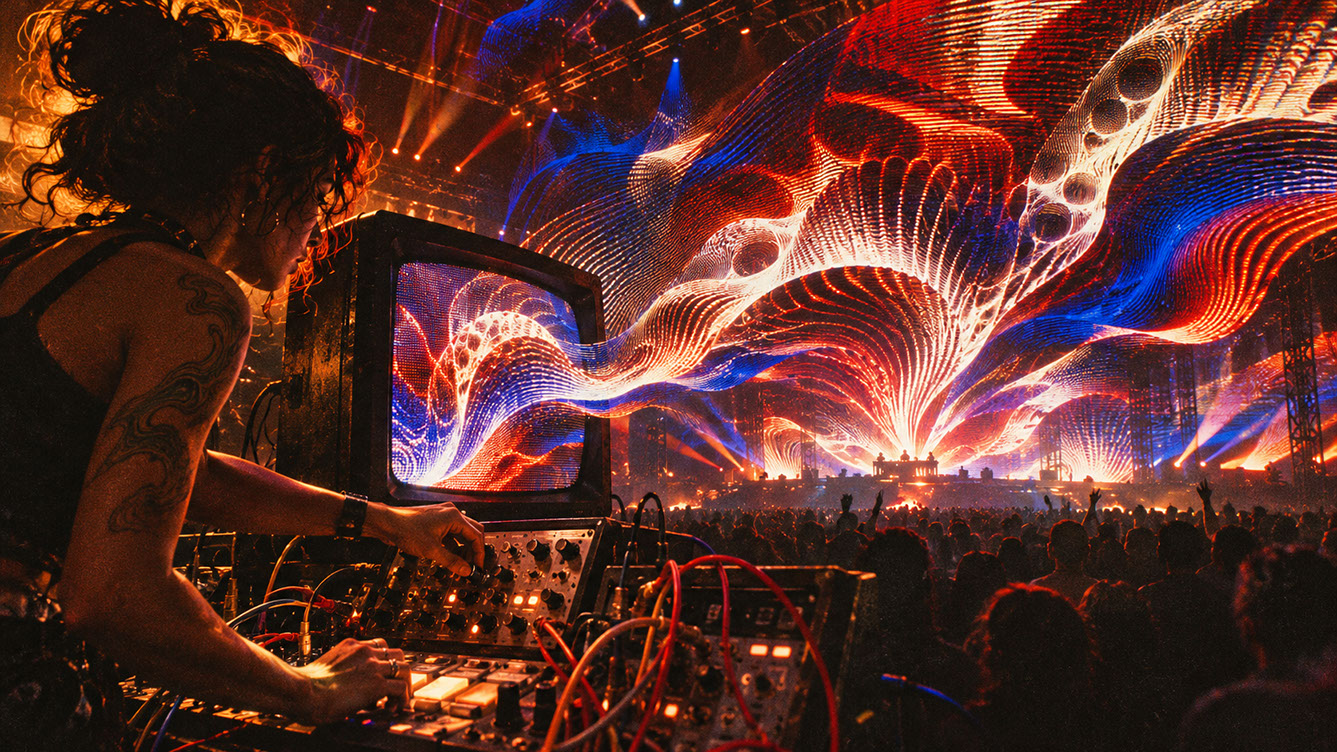 🔍 PLATE 01 — CLICK TO EXPAND
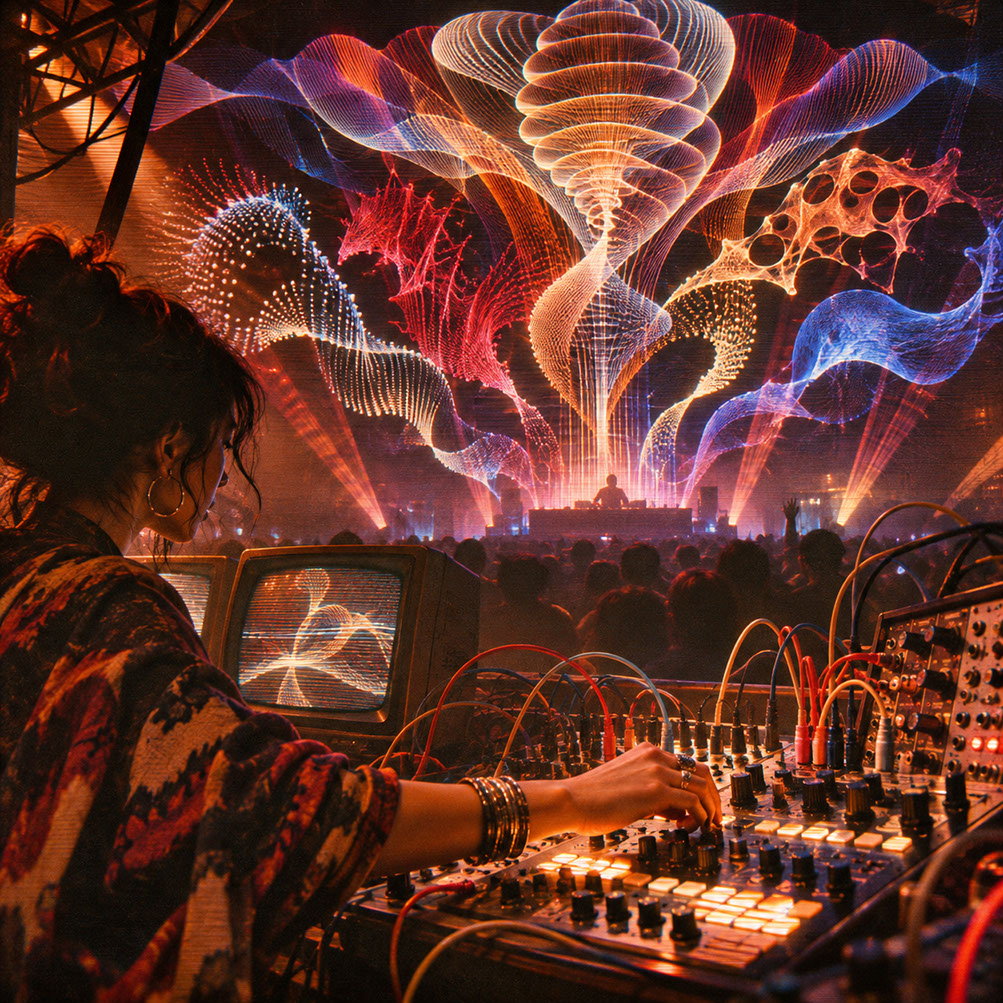
Plate 01 — Series Introduction — Playing the Screen Like a Living Visual Instrument at Front of House: Plate 01 (Series Introduction): Moving beyond passive clip playback to treat the stage canvas as an expressive, human-directed visual instrument.
Episode 1: The Death of Clip Launching — Generative Performance Systems
Episode 1 examines why traditional clip-launching workflows are hitting a creative ceiling—and why generative, seed-based visual systems that never repeat are defining the next VJ era. Rather than discarding existing video libraries, modern performers repurpose pre-rendered clips as texture sources, luminance masks, and emergency fallback layers inside a resilient three-layer architecture uniting a dependable base, reactive generative core, and human-triggered accents.
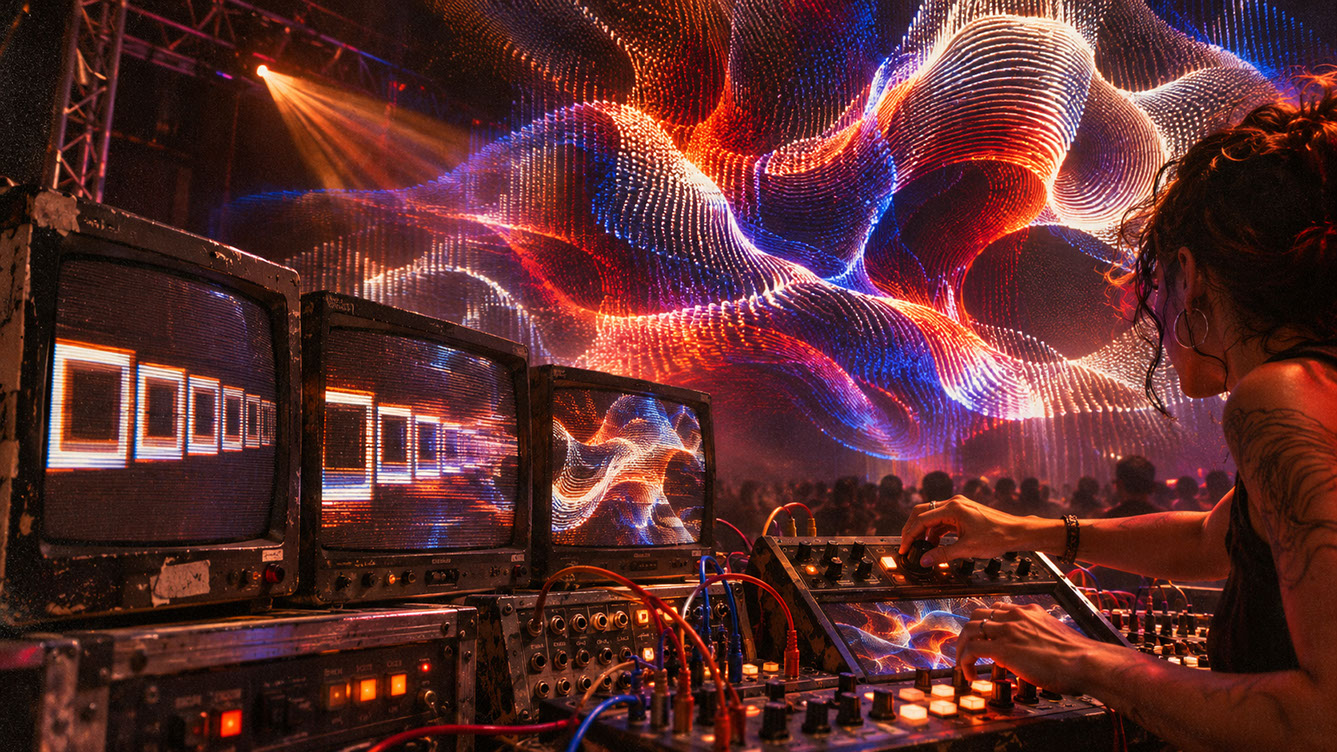 🔍 PLATE 02 — CLICK TO EXPAND
Plate 02 — Episode 1 Preview — Seed-Based Generative Visual Systems Replacing Static Loop Grids: Plate 02 (Episode 1 — Death of Clip Launching): Replacing predictable pre-rendered loops with three-layer seed-based generative performance systems.
Episode 2: Live Neural Canvas — Real-Time AI Inference in the VJ Pipeline
Episode 2 demystifies the integration of real-time AI inference—including StreamDiffusion, ComfyUI, and TensorRT-accelerated models—directly inside TouchDesigner and Resolume performance pipelines. We detail how to maintain sub-frame responsiveness, direct neural latent spaces with depth maps and ControlNet skeletons, and engineer a multi-tier Safety Layer Architecture so unpredictable inference artefacts never compromise a live show.
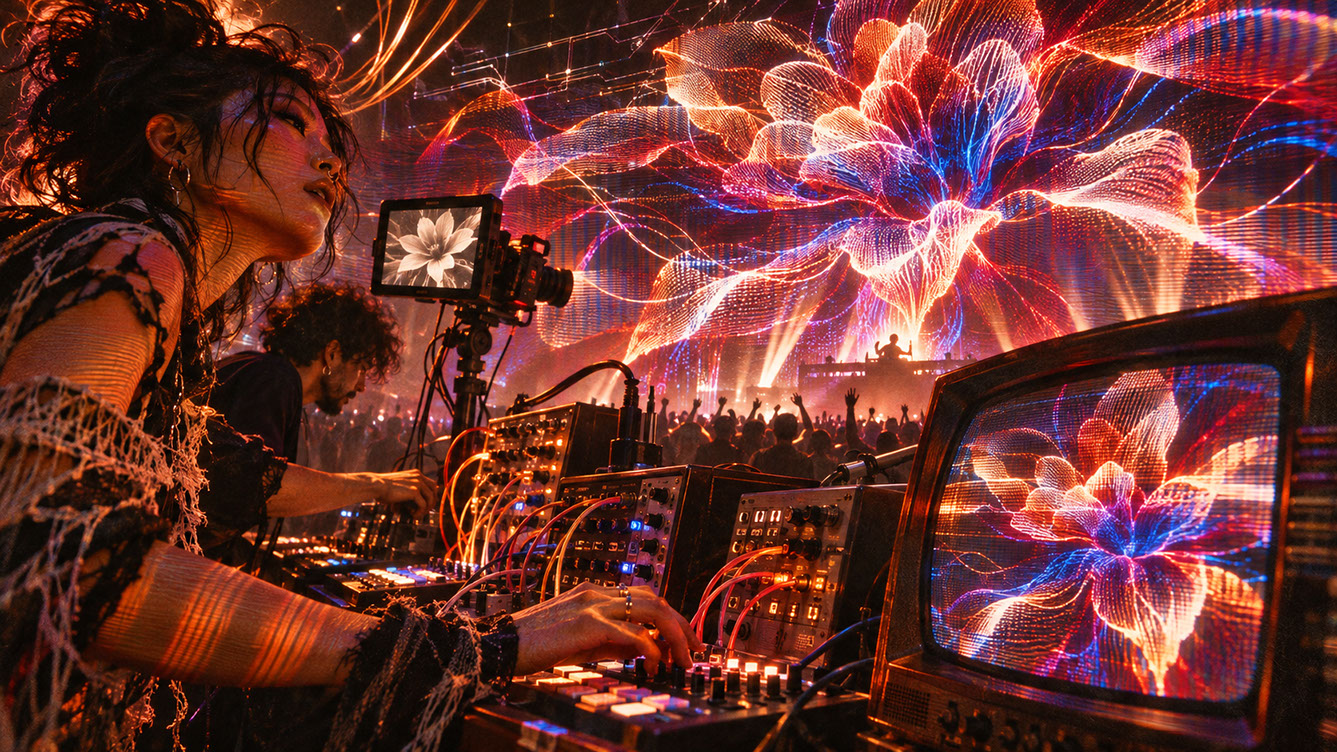 🔍 PLATE 03 — CLICK TO EXPAND
Plate 03 — Episode 2 Preview — StreamDiffusion & ComfyUI Real-Time AI Inference in a Live VJ Patch: Plate 03 (Episode 2 — Live Neural Canvas): Integrating sub-frame AI diffusion models with deterministic safety layers inside a live performance pipeline.
Episode 3: The Tactile Rig — CRT Feedback & Modular Video Synthesis
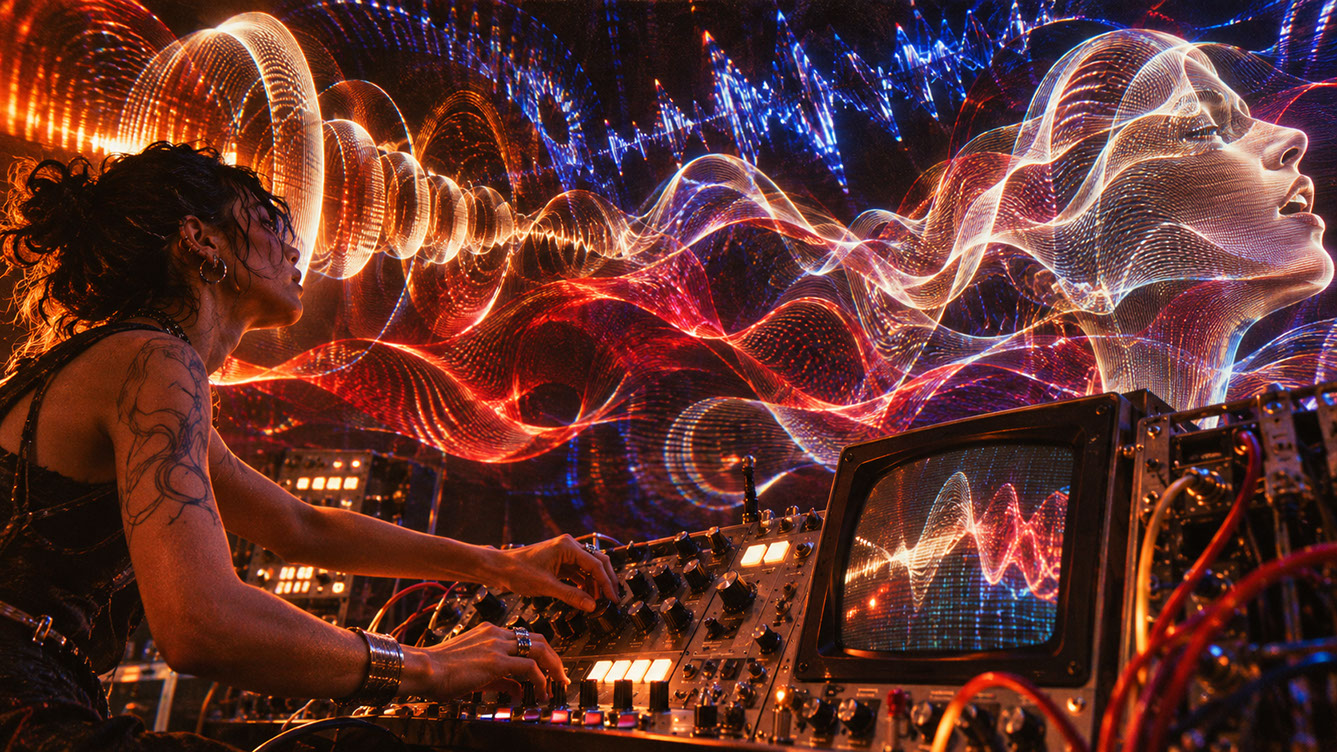
Episode 3 investigates the physical counter-revolution sweeping club and festival booths: why VJs are pairing pristine GPU shaders with dusty Sony PVM CRT monitors, LZX Industries modular video synthesisers, circuit-bent analogue mixers, and live optical camera feedback. We map the hybrid analogue-digital signal chain—from HDMI-to-composite downscaling to low-latency capture cards—that gives digital projections unmistakable phosphor warmth and human grit.
 🔍 PLATE 04 — CLICK TO EXPAND
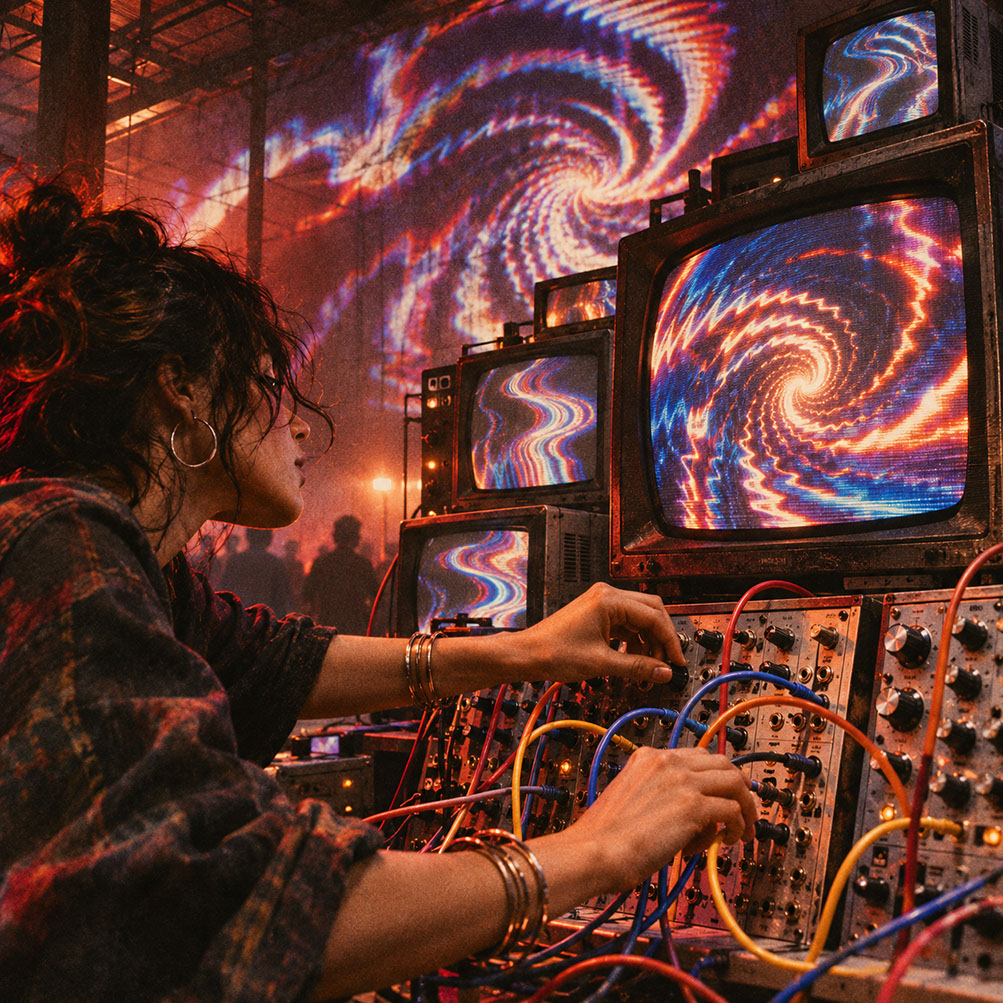
Plate 04 — Episode 3 Preview — Hybrid Analogue Rig With Sony PVM CRT Monitors and LZX Modular Synth: Plate 04 (Episode 3 — The Tactile Rig): Bringing authentic phosphor scanlines, voltage drift, and hands-on patch cable improvisation back to digital stages.
Episode 4: Beyond the Beat Drop — Advanced Audio-Reactive Visual Phrasing
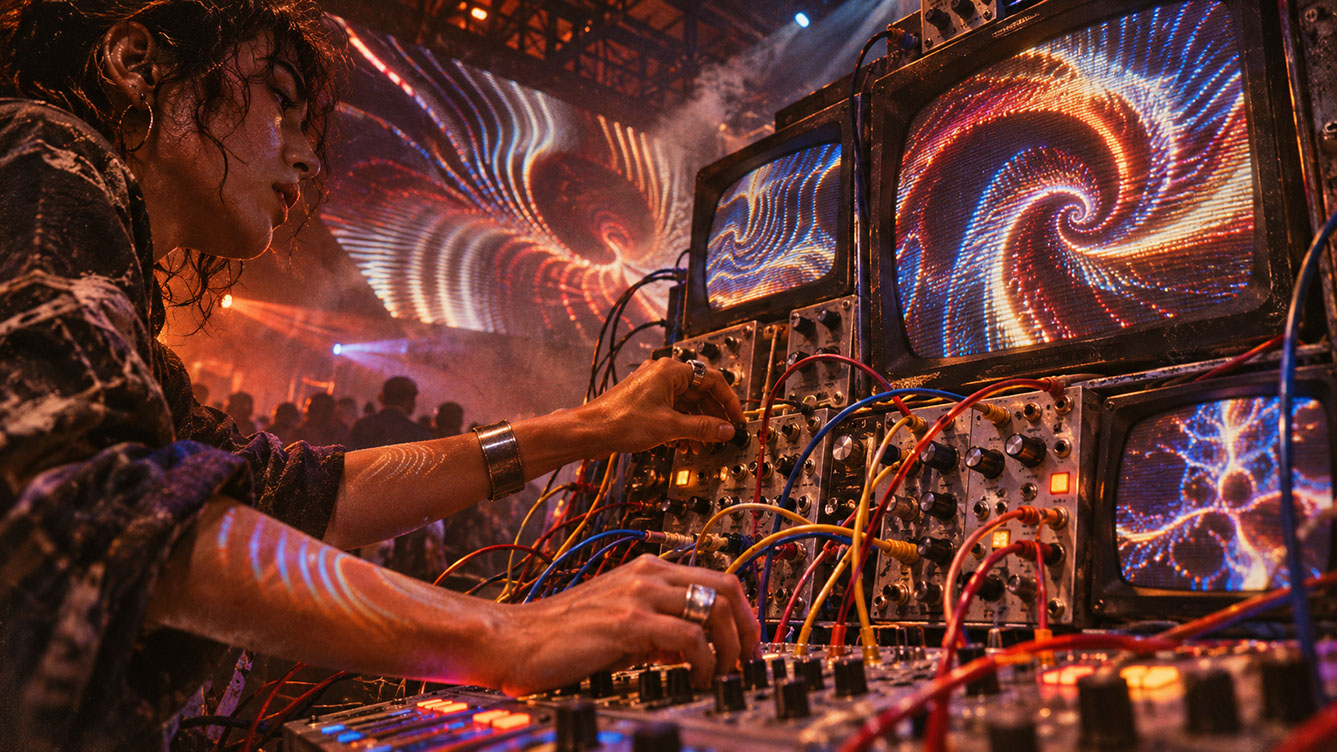
Episode 4 moves far beyond crude bass-to-scale pumping to build audio-reactive visual systems that genuinely listen to musical structure. Combining multi-band FFT spectrum extraction, real-time AI stem separation (isolating drums, bass, vocals, and synths on the fly), and Ableton Link / OSC phase synchronisation, we show how to calibrate attack-release envelopes and craft long-arc visual phrasing across diverse musical genres.
 🔍 PLATE 05 — CLICK TO EXPAND
Plate 05 — Episode 4 Preview — Multi-Band FFT Spectrum Analysis and Real-Time Audio Stem Separation: Plate 05 (Episode 4 — Beyond the Beat Drop): Moving past simple volume reactivity with FFT spectral extraction, real-time stem separation, and Ableton Link phrasing.
Episode 5: Spatial Stages & Volumetric Crowds — Apple Vision Pro & Beyond
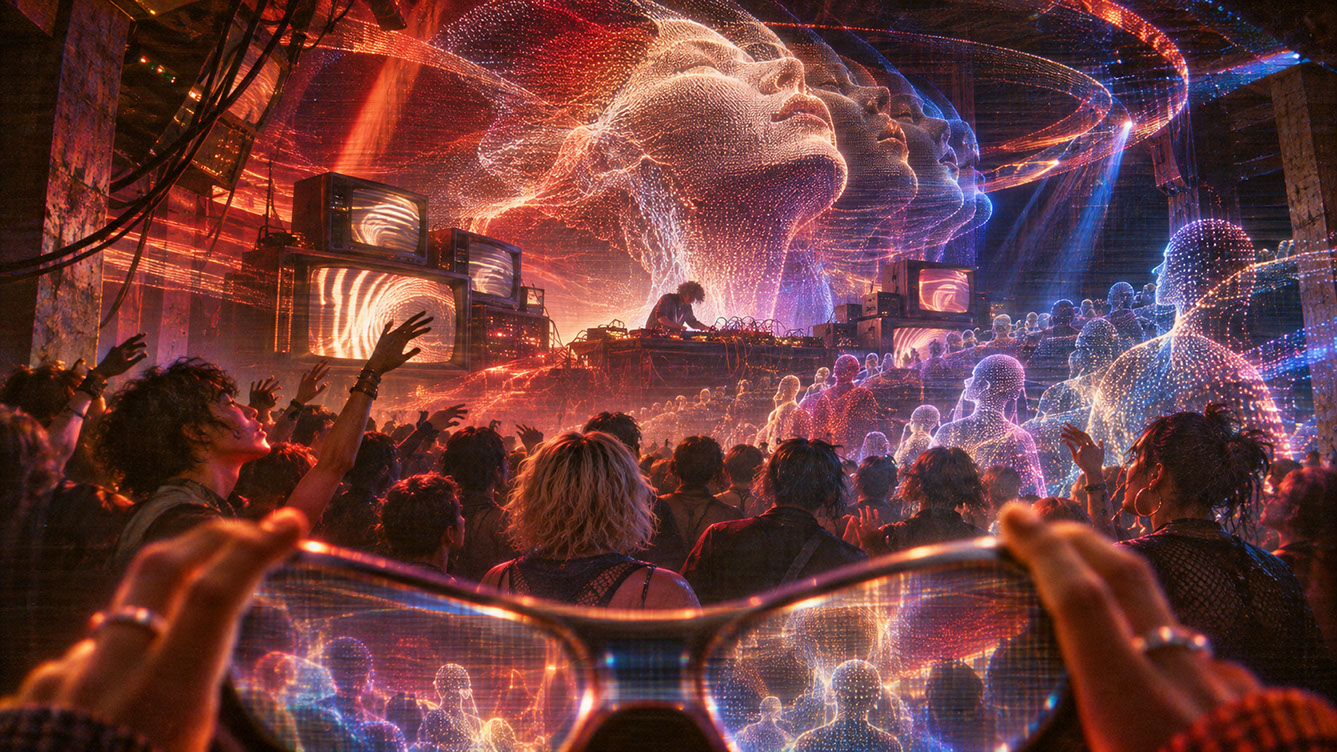
Episode 5 explores how live visual designers are simultaneously serving two audiences: the physical crowd on the venue floor and remote spatial headset viewers in Apple Vision Pro and Meta Quest ecosystems. We unpack 180-degree 8K stereoscopic Apple Immersive Video capture, real-time 3D Gaussian Splatting for venue reconstruction, and dual-deliverable production workflows that monetise live AV shows long after the encore.
 🔍 PLATE 06 — CLICK TO EXPAND
Plate 06 — Episode 5 Preview — Designing Simultaneous Live Visuals for Festival Crowds and Spatial Headsets: Plate 06 (Episode 5 — Spatial Stages & Volumetric Crowds): Dual-delivery production workflows uniting physical venue audiences with spatial computing viewers.
Episode 6: Real-Time Worldbuilding — Unreal Engine, Notch & Stage Tracking
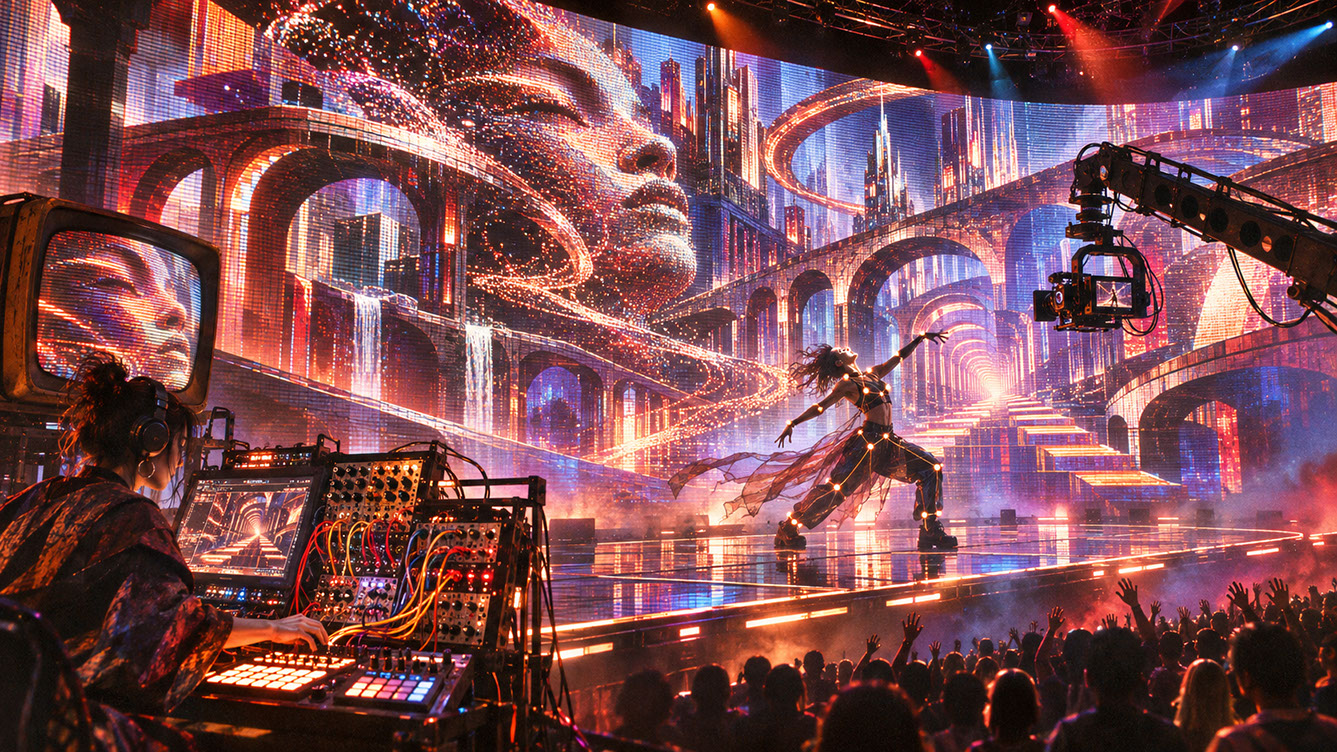
Episode 6 steps onto the stadium and festival mainstage, where Unreal Engine 5, Notch, and nDisplay clusters transform flat LED backdrops into responsive 3D worlds. By integrating Stype or Mo-Sys camera tracking, performer radar/LiDAR positional telemetry, and DMX lighting data, virtual environments shift perspective and weather in real time—backed by a strict performance-critical vs. decorative degradation hierarchy.
 🔍 PLATE 07 — CLICK TO EXPAND
Plate 07 — Episode 6 Preview — Unreal Engine & Notch Real-Time 3D Worlds With Performer Stage Tracking: Plate 06 (Episode 6 — Real-Time Worldbuilding): Transforming flat LED walls into living, position-aware 3D environments driven by Unreal Engine, Notch, and camera tracking.
Episode 7: The Scenographic Canvas — Beyond the Flat 16:9 LED Wall
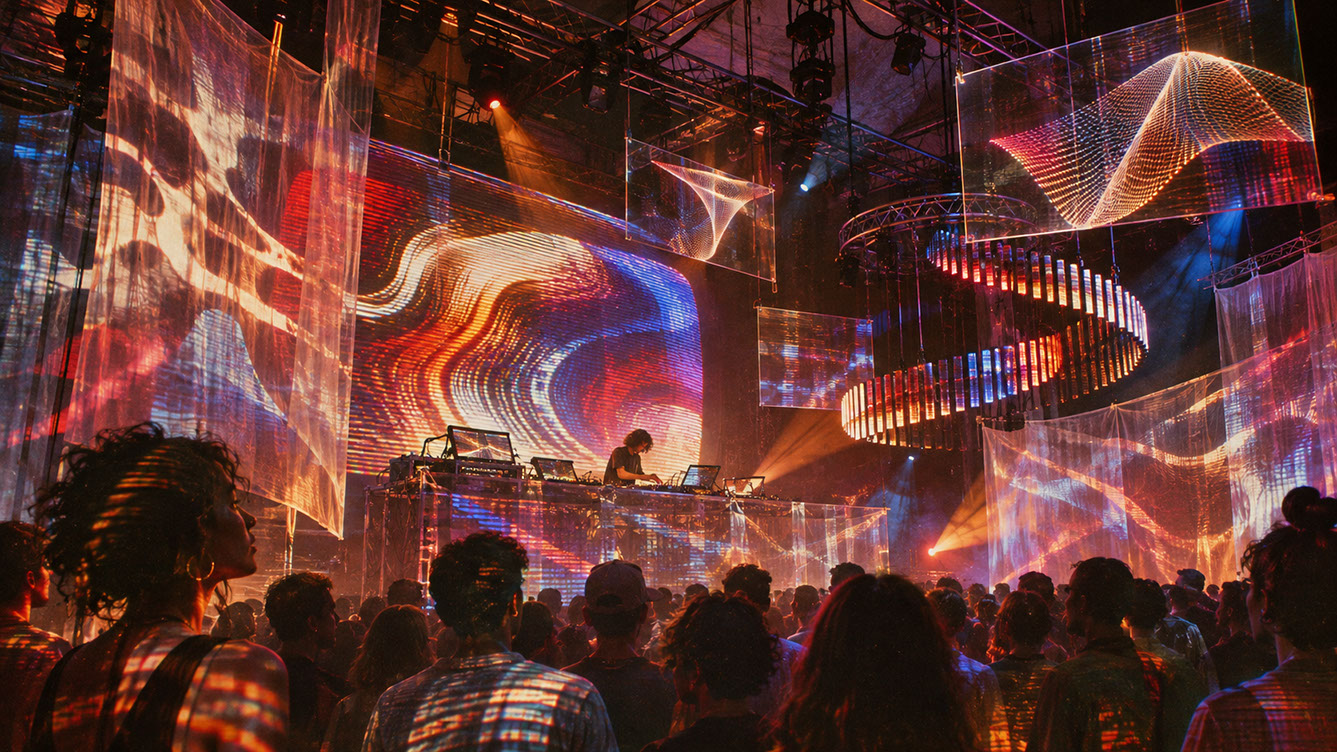
Episode 7 shatters the rectangular screen altogether. We examine seven surface technologies turning stage architecture into sculptural light: transparent OLED arrays, layered projection scrims and theatrical gauze, holographic sharkstooth meshes, kinetic winched LED totems, and spatial laser-projection hybrids—complete with a Digital Twin pre-visualisation methodology for testing sightlines and moiré before load-in.
 🔍 PLATE 08 — CLICK TO EXPAND
Plate 08 — Episode 7 Preview — Transparent OLEDs, Holographic Scrims, and Kinetic LED Stage Architecture: Plate 08 (Episode 7 — The Scenographic Canvas): Breaking out of the flat 16:9 rectangle with translucent meshes, transparent OLEDs, and kinetic scenic surfaces.
Episode 8: The Performer's Playbook — Touring VJ Systems & Failover Design
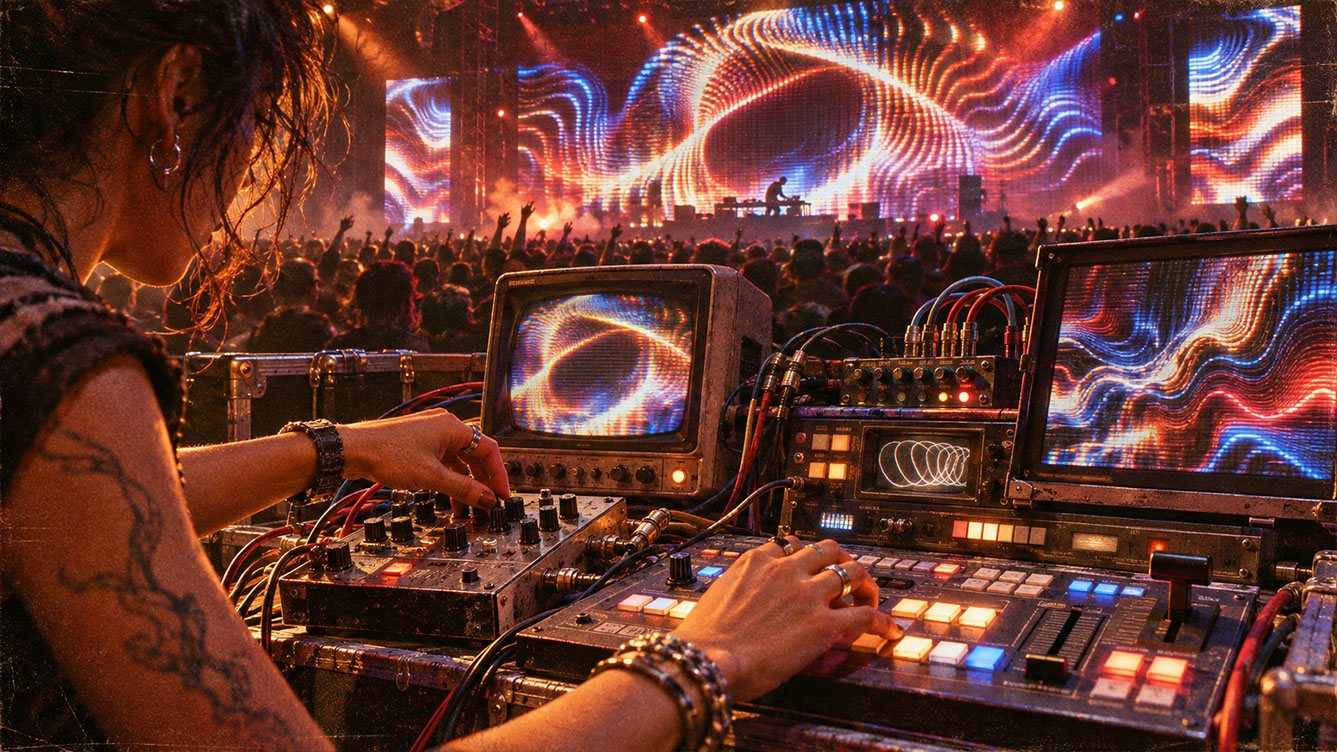
Episode 8 synthesizes the entire series into a battle-tested touring playbook. Because more interconnected systems mean greater on-stage responsibility, we detail NDI vs. SDI vs. Spout signal reliability, hardware A/B failover matrices, ergonomic MIDI/OSC controller design ("one control, one meaningful decision"), failure rehearsal drills, and the art of reading a live room while keeping the human artist firmly at the centre.
 🔍 PLATE 09 — CLICK TO EXPAND
Plate 09 — Episode 8 Preview — Bulletproof Touring VJ Rack With Redundant Failover & Custom MIDI Controls: Plate 09 (Episode 8 — The Performer's Playbook): Engineering bulletproof touring reliability, instant hardware failover, and intuitive human-centred performance controls.
Explore All 8 Episodes of the 2027 Live AV & VJ Trends Forecast
Jump directly to any episode in this 8-part series examining seed-based generative performance, real-time AI diffusion pipelines, CRT and modular video synthesis, stem-separated audio reactivity, spatial Vision Pro stages, Unreal/Notch worldbuilding, scenographic stage surfaces, and touring failover design.
Episode 01 of 08Read Episode →The Death of Clip Launching: Why Generative Performance Will Define the Next VJ Era Episode 02 of 08Read Episode →Live Neural Canvas: 7 Essential Steps to Integrate Real-Time AI Inference into Your Live Visual Performance Pipeline Episode 03 of 08Read Episode →The Tactile Rig: Why CRT Feedback and Modular Video Synthesis Are Dominating Live Visuals in 2027 Episode 04 of 08Read Episode →Beyond the Beat Drop: 7 Advanced Audio-Reactive Visual Techniques That Transform Your Live Performance Episode 05 of 08Read Episode →Spatial Stages and Volumetric Crowds: 7 Essential Techniques for Designing Live Visuals for Apple Vision Pro and Beyond Episode 06 of 08Read Episode →Real-Time Worldbuilding: How Unreal Engine, Notch and Stage Tracking Transform LED Walls into Living Worlds Episode 07 of 08Read Episode →Beyond the 16:9 LED Wall: 7 Revolutionary Surface Technologies Transforming Live Visual Performance in 2027 Episode 08 of 08Read Episode →Play the Screen Like an Instrument: The Touring VJ's 2027 Performance System for Bulletproof Live Visuals⚡ 5 Strategies to Consider
STUDIO PLAYBOOK // 5 DIRECTIVES❓ Frequently Asked Questions — 5 Q&As (5 Q&As)
SCHEMA.ORG/FAQPAGE // 5 Q&As (5 Q&As)Q1. Do I need to abandon all my existing clips to move to generative performance?
Not at all. Your existing clips become valuable texture sources, luminance masks, colour references, and fallback layers within a generative system. Rather than replacing clips entirely, you're repositioning them as ingredients that feed into and support responsive, real-time visual generation.
Q2. What's the minimum hardware requirement to start experimenting with generative VJ systems?
You'll need a capable GPU (modern NVIDIA cards work particularly well with TouchDesigner), an audio interface with good latency for real-time analysis, and software like TouchDesigner (which has a free non-commercial version) paired with Resolume or similar output software. Start with what you have and upgrade as you identify bottlenecks.
Q3. How long does it take to build a functional three-layer generative system?
Expect several weeks to build a functional foundation if you're new to the tools. However, you can start adding single generative elements to your existing setup immediately. The system grows through ongoing refinement as you perform live and discover what works for your particular style and musical context.
Q4. What's the difference between seed-based generation and simple randomness?
Seed-based generation uses controlled variability within defined rules—the same seed value produces the same output, but when seeds derive from live audio or performance data, you get infinite meaningful variations. Simple randomness lacks this control and can produce chaotic, disconnected results. Seed-based systems give you variability with intention.
Q5. How do generative visuals stay synchronised with live music when there's no fixed timeline?
Generative systems connect to audio through real-time analysis (FFT, transient detection) and synchronisation protocols like Ableton Link and MIDI clock. Rather than following a predetermined timeline, they respond to what's happening musically in the moment—bass frequencies might drive scale, transients trigger accents, and tempo data keeps everything phase-locked.
EXPLORE RELATED STUDIO TAGS (6):
Glad this piece sparked something — want the matching 4096×4096px .ZIP pack?
Enter your email below for an instant direct download of Studio Seamless Pattern Pack — Drop 01 (WPAY_DROP01.zip) plus new Studio Journal essays & free drops.